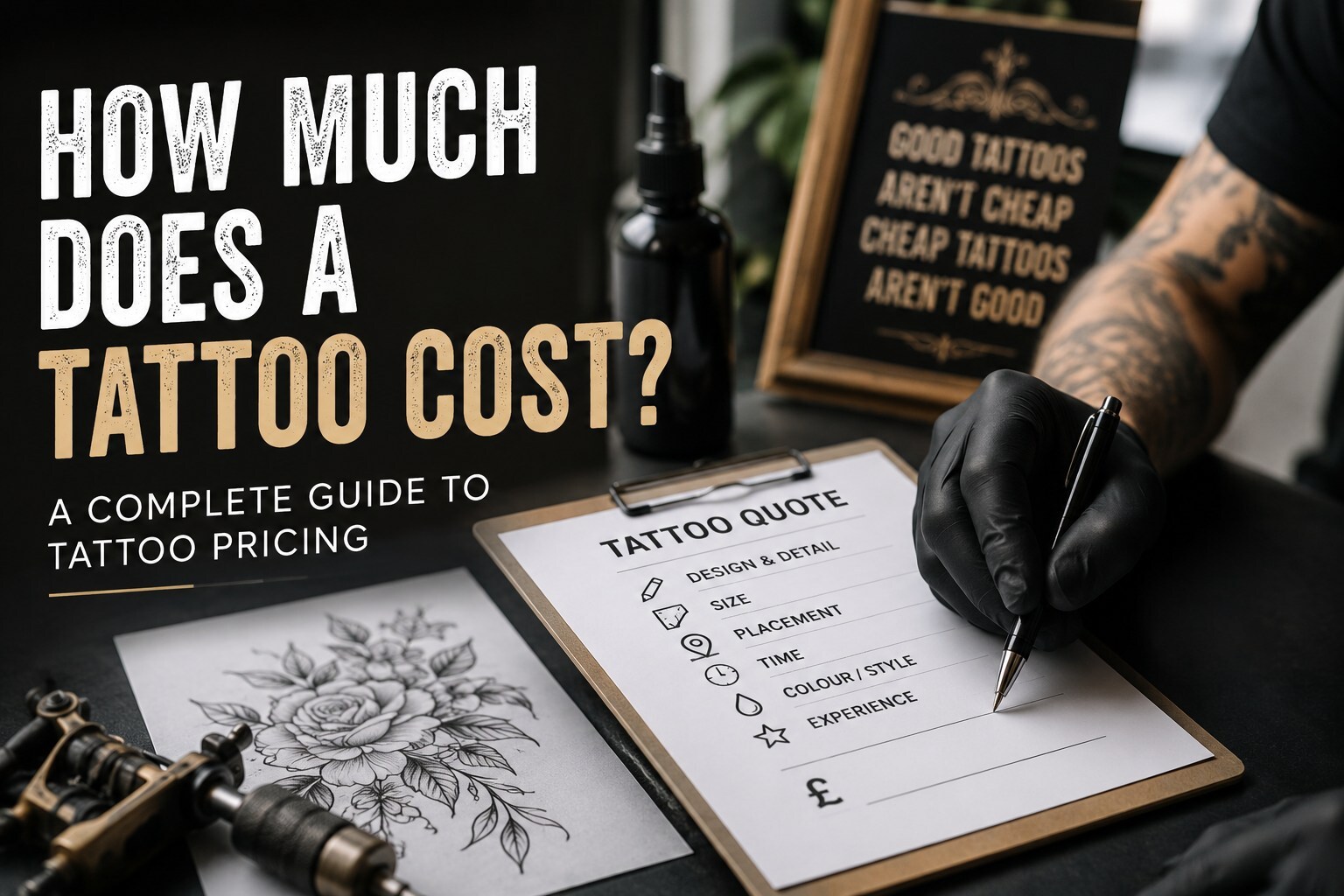
It’s one of the most common questions people ask before getting tattooed: “How much does a tattoo cost?”
And honestly? It depends.
That might sound like a bit of a non-answer, but tattoo pricing is not quite the same as buying something off a shelf. A tattoo is custom artwork, a skilled service, a permanent body modification, and a bit of a collaboration between you and your tattoo artist. The final price depends on the design, size, placement, detail, style, time, and sometimes even how well your skin takes the ink.
At The Inkpot, we know tattoo pricing can feel a little mysterious if you’re new to it, so here’s a proper breakdown of what actually affects the cost of a tattoo.
Why Tattoo Prices Vary
No two tattoos are exactly the same. Even if two people ask for “a small flower tattoo”, the price can change depending on the design. Is it a simple fine line flower? A shaded black and grey piece? A colour tattoo with leaves, detail, and soft gradients? Is it going on the wrist, ribs, shoulder, hand, or ankle?
All of those things matter.
Most professional tattoo studios price tattoos based on the time, skill, and materials involved. A small, simple tattoo may be priced at the studio minimum, while a larger custom tattoo, sleeve tattoo, realism piece, or detailed colour tattoo will naturally cost more.
Tattoo Size
Size is one of the biggest factors in tattoo cost. A tiny symbol, small name tattoo, or simple linework tattoo will usually be cheaper than a full forearm tattoo, large thigh piece, back tattoo, or full sleeve.
That said, small does not always mean easy. Some tiny tattoos require a lot of precision, especially if they include fine lines, lettering, delicate details, or tricky placement. A small tattoo can still take time to design, stencil, place properly, and tattoo cleanly.
Tattoo Detail and Style
The more detail a tattoo has, the more time it usually takes.
A simple blackwork tattoo will often cost less than a highly detailed realism tattoo, colour tattoo, portrait tattoo, mandala tattoo, or intricate illustrative piece. Shading, colour blending, texture, and fine details all add time.
For example, a small outline butterfly tattoo may be relatively quick. A realistic butterfly tattoo with colour, soft shading, highlights, and detailed wings will take longer and therefore cost more.
Popular tattoo styles that can affect pricing include:
Fine line tattoos
Blackwork tattoos
Traditional tattoos
Realism tattoos
Colour tattoos
Script and lettering tattoos
Floral tattoos
Geometric tattoos
Cover-up tattoos
Custom tattoo designs
Each style requires a different approach, and some styles are much more time-intensive than others.
Tattoo Placement
Where you want your tattoo can also affect the price.
Some areas of the body are easier to tattoo than others. A flat area like the upper arm or thigh is usually more straightforward. Areas like the ribs, hands, fingers, neck, feet, elbows, knees, and wrists can be more difficult because the skin is thinner, stretchier, bonier, or moves more.
Placement can also affect how long it takes to get the stencil right. Your tattoo artist wants the design to sit properly on your body, flow with your shape, and look good once healed. That bit matters more than people realise.
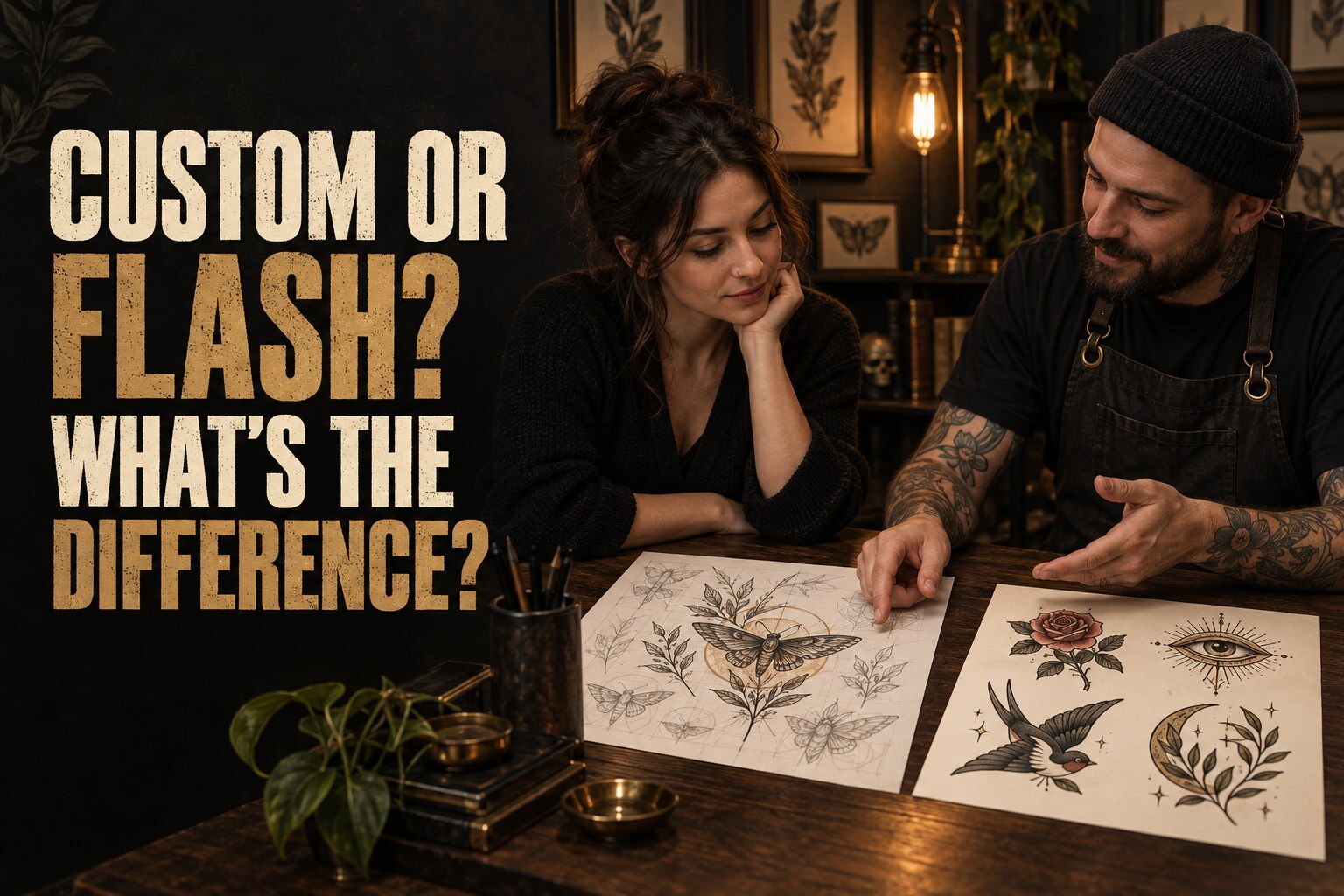
Custom Tattoo Designs
If you want a custom tattoo, you’re also paying for the artist’s time and experience in creating the design. This includes understanding your idea, working out what will actually tattoo well, adjusting the composition, and making sure the final piece suits your body and the placement.
A good tattoo artist is not just copying a picture onto skin. They are thinking about design, longevity, line weight, contrast, healing, and how the tattoo will look years down the line.
That’s why custom tattoos can cost more than simple flash tattoos.
Studio Minimum
Most tattoo studios have a minimum charge. This covers the basic cost of setting up for your tattoo, even if the tattoo itself is very small.
Every appointment requires sterile equipment, needles, ink, gloves, cleaning products, stencil materials, disposable supplies, aftercare advice, and time from the artist. Even a tiny tattoo still needs a full professional setup.
So if you ask for a tiny heart, dot, name, or little symbol, there will usually still be a minimum tattoo price.
Cheap Tattoos vs Good Tattoos
We’ll be honest: price should not be the only thing you care about when choosing a tattoo studio.
A tattoo is permanent. Going for the cheapest tattoo you can find may save money on the day, but it can cost more later if it heals badly, fades quickly, scars, blows out, or needs covering up.
A good tattoo should be done safely, cleanly, professionally, and with proper care. You are paying for the artist’s skill, the studio’s hygiene standards, the time taken to do the job properly, and a piece of artwork you’ll wear every day.
Cheap tattoos are not always bad, and expensive tattoos are not automatically perfect — but if a price seems suspiciously low, it’s worth asking why.
How to Get an Accurate Tattoo Quote
The best way to find out how much your tattoo will cost is to book a consultation or send clear details to the studio.
To get a more accurate tattoo quote, include:
What you want
Approximate size
Where you want it on your body
Whether you want colour or black and grey
Any reference images
Whether it is a new tattoo, rework, or cover-up
At The Inkpot, we’re always happy to chat through ideas, explain what will work best, and give you a realistic idea of tattoo prices before you book.
So, How Much Does a Tattoo Cost?
The cost of a tattoo depends on the size, style, detail, placement, and time involved. Small tattoos may start from the studio minimum, while larger custom tattoo designs, sleeves, cover-ups, realism tattoos, and colour pieces will cost more.
At The Inkpot we don’t use a strict one-size-fits-all price list, but very small, simple tattoos usually start from around £40, with final prices based on the design, size, detail, placement and time involved.
The best advice? Don’t just ask, “How much is a tattoo?” Ask, “How much will it cost to do this tattoo properly?”
Because a good tattoo is not just ink in skin. It’s artwork, trust, skill, hygiene, and a bit of magic — all wrapped up in something you’ll carry with you for life.
Got a tattoo idea in mind? Book your free consultation with The Inkpot and we’ll help you turn it into something you’ll love.