The first few days with your new tattoo feel like a balancing act between excitement and uncertainty – your skin is doing remarkable work to heal, but it’s easy to wonder if what you’re experiencing is normal.
What to Expect in the First Few Days
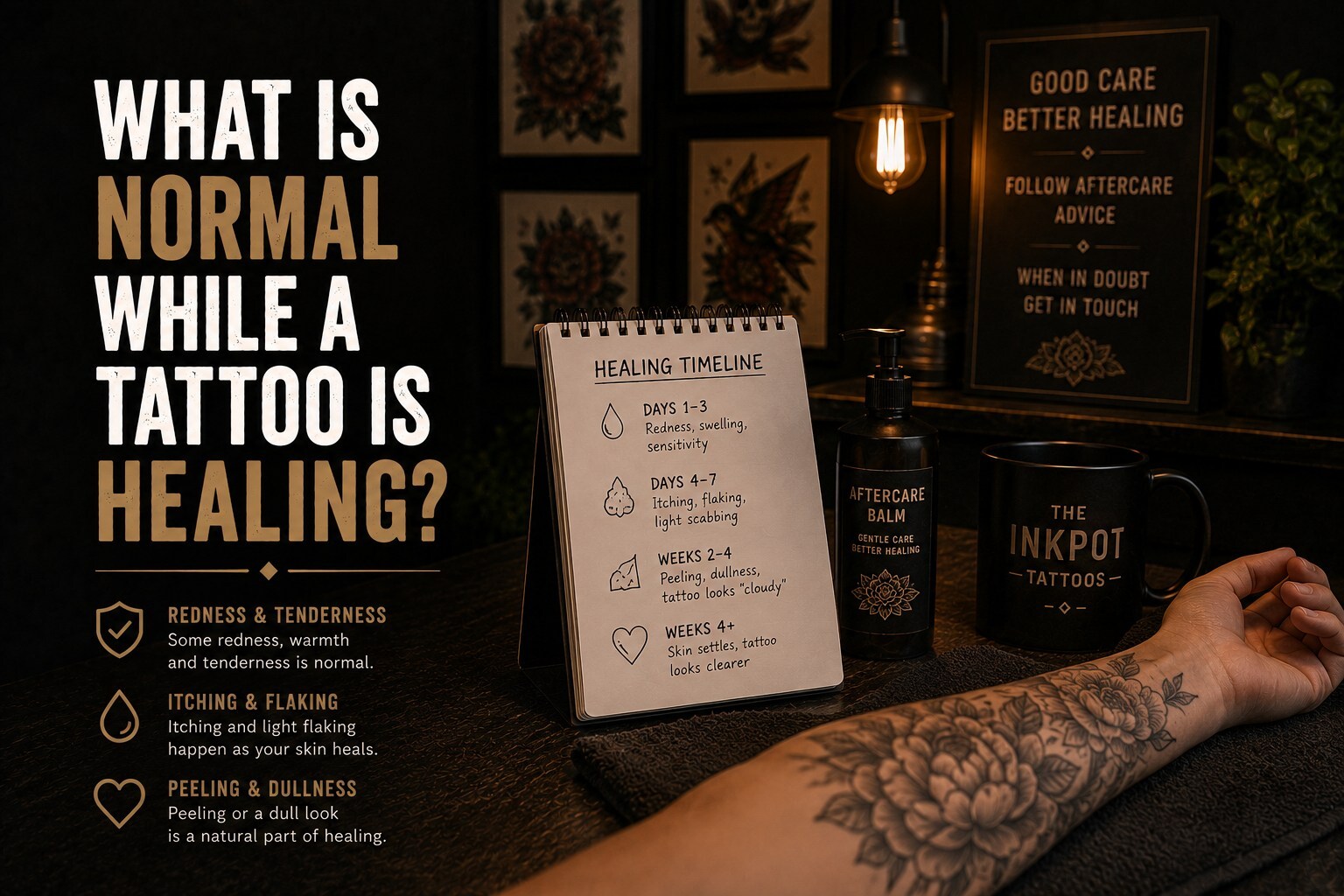
In the first 24 to 48 hours, your tattoo will likely look fresh, bright, and slightly swollen. The area may feel tender or warm to the touch, much like a mild sunburn. This is completely normal. Your body has just responded to an injury by sending extra blood flow and immune cells to the site.
Swelling varies depending on where the tattoo is placed. Areas with thinner skin or more nerve endings—like the ribs, ankles, or inner arm—often swell a bit more than fleshy areas like the thigh or upper arm. Gravity also plays a part; tattoos lower down on the body may hold fluid longer.
You might notice small blisters forming around the edges of larger pieces. Do not pop them. Blisters are your skin’s way of creating a protective cushion over raw tissue. If you break that barrier, you risk introducing bacteria and disrupting the healing process. Let them dry out naturally.
Avoid submerging your tattoo in water for at least two weeks. Showers are fine—brief, lukewarm ones where you gently wash away plasma and ink residue—but baths, swimming pools, hot tubs, and long soaks should wait until the skin has fully closed over.
Common Symptoms and What They Mean
As the initial inflammation settles, your tattoo will move into its next phase. This is when itching usually starts, typically around day three or four. Itching can be intense. It feels like a deep, restless tickle that makes you want to scratch constantly.
Here is why it happens: new skin cells are forming and pushing up through the damaged layers. Your nerves are firing signals as they reconnect and settle into place. It is uncomfortable, but it is also a sign of progress.
Resist the urge to scratch. Scratching can pull out ink that has not yet settled, leading to patchy colour or scarring. Instead, gently tap the area with clean hands or apply a thin layer of fragrance-free moisturiser recommended during your consultation. Keeping the skin hydrated reduces the itch significantly.
Mild burning sensations may also come and go during this period, especially when you move muscles around the tattooed area. This is normal as long as it does not escalate into sharp or throbbing pain.
When to Worry: Signs of Infection
Knowing what is normal means knowing what is not. While some redness and swelling are expected, certain signs indicate your tattoo may be infected rather than simply healing.
- Pus or greenish discharge: A small amount of clear fluid or blood plasma in the first day or two is fine. Thick yellow, green, or foul-smelling pus is not.
- Fever above 38°C: If you develop a temperature alongside your tattoo symptoms, seek medical advice promptly.
- Spreading redness: Redness confined to the immediate tattoo area in the first few days is normal. If the redness spreads outward, becomes hot to the touch, or forms streaks leading away from the site, that is a warning sign.
If you notice any of these symptoms, do not panic—but do act. Contact your GP and let us know at The Inkpot so we can support you. We would rather you ask than sit there worrying whether it’s serious or not.
The Peeling Phase: What Is Actually Happening
Around day five to seven, most tattoos begin peeling. This is often the most unsettling part of healing because your tattoo can look cracked, dry, and slightly mottled as flakes lift away.
Peeling is simply part of skin regeneration. The top layer of damaged skin is shedding to reveal fresh tissue underneath. It looks messy, but it is a natural process. Think of it like a sunburn coming off—only this time, there is beautiful ink waiting beneath.
The golden rule: do not pick at peeling skin. Even if a flake is hanging on by a thread, leave it alone. Picking pulls away pigment that has not fully anchored in the dermis, which can lead to light spots or blurred lines later on. Let gravity and gentle washing handle the rest.
Moisturising helps here too. A thin layer of recommended aftercare ointment keeps the skin supple and reduces flaking without smothering it. Over-moisturising can clog pores and slow healing, so less is usually more.
Colour Changes During Healing
New tattoo owners often worry when their design looks faded or dull during the peeling stage. This is temporary. As the top layer of skin sheds, it takes some surface ink with it, making the colours appear washed out.
This is not permanent fading. Over the next few weeks, as the deeper layers continue to heal and settle, the true colour will emerge again. Darker tattoos may look slightly softer than they did fresh out of the studio, but that is normal skin behaviour—not a sign your artist missed spots.
Sun exposure before full healing can cause genuine fading, however. Ultraviolet rays break down pigment particles in the skin. Until your tattoo has fully healed—usually four to six weeks—keep it covered or avoid direct sunlight entirely. After that, sunscreen becomes your best long-term ally for colour preservation.
Long-Term Healing: What to Watch For
Skin is not static. It moves, stretches, and changes over time, which means your tattoo will continue evolving well beyond the initial healing window.
Some minor scarring can occur, especially if you picked at scabs or irritated the area during recovery. Most tattoos heal with minimal visible marks, but fine lines may soften slightly as collagen remodels under the surface. This is natural ageing, not a flaw in the work.
Colour may continue to settle for several months. Black and grey pieces often look crispest after three to six months of full healing. Coloured tattoos sometimes need longer for pigments to stabilise completely.
If you notice persistent redness, raised bumps, or ongoing discomfort weeks later, mention it during a follow-up consultation. We can assess whether it is normal variation or something that needs attention.
When to Contact Inkpot Studio
You do not need to suffer in silence if something feels off. We are here to help you through the healing process, not just hand over a care sheet and disappear.
Contact us if:
- Pain persists beyond three days without improvement
- You see signs of infection like pus, fever, or spreading redness
- You are unsure whether your aftercare routine is working correctly
- Your tattoo looks significantly different from what we discussed during the session
A quick photo sent over email or a message through our booking system is often enough for us to reassure you. If something genuinely needs attention, we will guide you on next steps without delay.
Healing takes time, and every body responds differently. What matters most is giving your skin the care it needs and knowing when to reach out for support. Your tattoo does not need a fashion show right now—it needs peace, patience, and proper aftercare.
Got a tattoo idea in mind? Book your free consultation with The Inkpot and we’ll help you turn it into something you’ll love.