You’ve just got your new tattoo. It looks brilliant. You’re buzzing. And then you remember: you have a heavy leg day scheduled for tomorrow, or maybe a long run in the park.
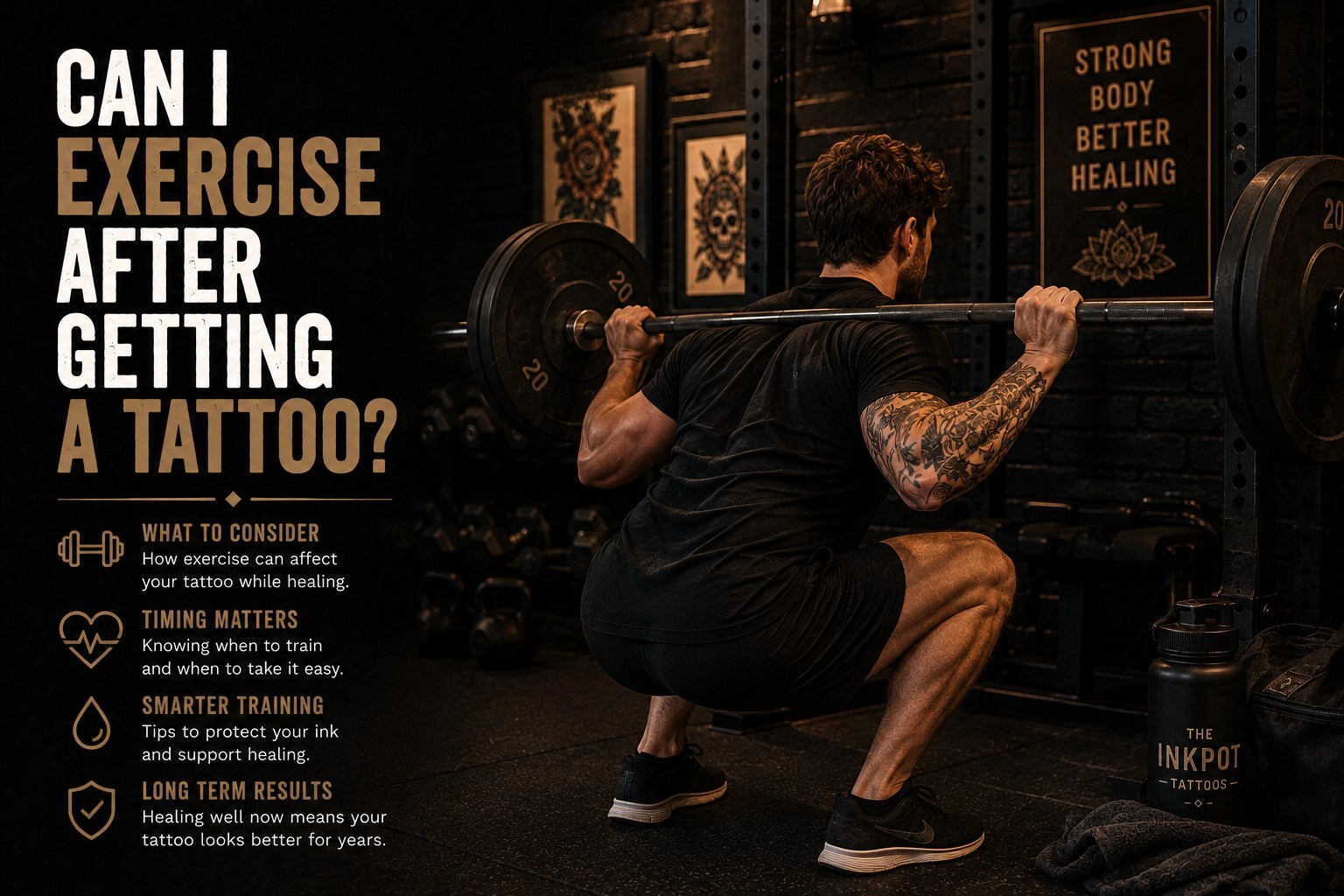
Can I exercise after getting a tattoo? The short answer is: not yet. But that doesn’t mean you need to stop moving entirely. It means you need to be strategic about it.
Your skin has just been through significant trauma. Needles have punctured the dermis thousands of times, depositing ink and triggering your body’s natural inflammatory response. In those first few weeks, your priority is healing—not burning calories or hitting a new personal best.
Why Exercise Matters During Healing
It isn’t just about comfort. Working out too soon can actively damage your fresh tattoo and increase the risk of infection. Here’s what actually happens when you push your body before it’s ready:
- Sweat traps bacteria. Sweat is mostly water, but it also contains salts, urea, and trace amounts of waste products. When sweat sits against a healing tattoo, it creates a moist environment where bacteria can thrive. Your open skin is essentially a doorway for those microbes.
- Friction damages fresh ink. Gym equipment, tight leggings, sports bras, and even your own skin rubbing together can scrape away scabs or irritate the surface of the tattoo. This isn’t just uncomfortable—it can pull pigment out of the skin before it has settled.
- Swelling affects design clarity. Intense exercise increases blood flow to the muscles. If your tattoo is in an area that gets worked (think shoulders, arms, or thighs), swelling can distort the shape and make lines appear blurred as they heal.
This isn’t scaremongering. It’s just biology. Your skin needs time to close up and rebuild its barrier.
The 2-4 Week Waiting Period
Most artists, including us at The Inkpot Studio in Ross-on-Wye, recommend waiting two to four weeks before returning to intense workouts. But why that specific window?
In the first few days, your tattoo is an open wound. It needs to form a proper scab and begin the initial stages of skin regeneration. During this time, even light sweating can be problematic.
By week two or three, the surface has usually closed over. The ink is settling into the deeper layers of the dermis, and the risk of colour fading drops significantly. However, “usually” is the operative word here. Healing timelines vary by individual, tattoo size, and placement.
A small line on your ankle might be ready for a jog after two weeks. A large, detailed piece covering your entire back or thigh may need closer to four—or even six—weeks before you can safely throw yourself into heavy lifting.
Here’s the truth: overexertion can delay healing even if you’re following all the other guidelines perfectly. If you push too hard, too soon, your body diverts energy away from repairing skin and towards recovering from muscle fatigue. That’s a trade-off that rarely favours your tattoo.
Saunas, Steam, and Heat Risks
If the gym has a sauna or steam room, you need to avoid it completely for at least four weeks. This is non-negotiable.
Extreme heat causes blood vessels to dilate, which increases bleeding risk and can make your tattoo ooze plasma and ink long after it should have settled. More importantly, moist, hot environments are breeding grounds for bacteria and fungi.
We see this often enough in the studio: a client mentions they went for a “quick steam” to relax their muscles, only to return with a rash or excessive peeling around the tattoo. Heat can also distort ink placement during the early healing stages, leading to blurred lines that no amount of moisturiser will fix.
Hot tubs and swimming pools fall into the same category. Chlorine, salt water, and lake bacteria are all unwelcome guests at a fresh tattoo party. The Inkpot recommends waiting around one month before exposing a fresh tattoo to these environments. As an absolute minimum, keep it away from prolonged soaking for two weeks.
Safe Exercise Options
This doesn’t mean you need to spend three weeks on the sofa staring at the ceiling. Movement is good for circulation, and gentle activity can actually support healing by keeping blood flowing without overtaxing your body.
Here are some safer options during the early stages:
- Walking. Low impact, minimal sweat, and great for cardiovascular health. Just make sure your tattoo isn’t rubbing against tight trousers or a bag strap.
- Yoga (with caveats). Gentle stretching is fine, but avoid poses that put direct pressure on the tattooed area. If you’ve got a fresh wrist or ankle piece, skip the downward dog for now.
- Cycling. Stationary cycling can work if you wear loose clothing and don’t overheat. Outdoor cycling adds sun exposure and wind, which complicates things—more on that later.
Swimming is tempting, especially in summer, but it’s one of the riskiest activities during healing. Even with waterproof bandages (which are rarely truly waterproof), prolonged immersion softens scabs and introduces bacteria. It’s worth waiting.
Aftercare During Workouts
If you’re doing light activity or returning to moderate exercise after the initial two weeks, here’s how to protect your tattoo:
- Apply a thin layer of barrier ointment before exercising. This isn’t about slathering on thick cream. A very light application can help create a protective layer against sweat and friction. Remember: too much moisturiser traps moisture and slows healing. Less is more.
- Wear loose, breathable clothing. Cotton or moisture-wicking fabrics that don’t cling to the tattoo are ideal. Avoid tight leggings, sports bras, or compression gear that covers fresh ink.
- Avoid re-bandaging unless necessary. Once the initial dressing is off (usually within 24 hours), your tattoo needs air. Bandaging it up for a workout traps sweat and bacteria against the skin.
- Wipe sweat immediately. If you start sweating during exercise, gently dab the area with a clean, damp cloth or paper towel. Don’t rub. Just remove the moisture as quickly as possible.
The best aftercare product isn’t a particular cream or soap—it’s basic hygiene and an understanding of how to prevent infection. Most healing problems arise from poor habits rather than the products themselves.
Recognising Warning Signs
Your body will tell you if something is wrong. The key is knowing what normal healing looks like versus what requires attention.
It’s completely normal to experience mild redness, slight swelling, tenderness, clear or slightly coloured plasma discharge, peeling, and itching during the first few days. These are standard stages of skin repair.
However, you should pause your exercise routine and seek medical advice if you notice:
- Persistent redness beyond two days that spreads or intensifies rather than fades.
- Increasing pain or tenderness after the initial healing period. Some soreness is normal; escalating pain is not.
- Unusual discharge, particularly thick pus or foul-smelling fluid.
- Swelling that doesn’t subside or continues to worsen after the first few days.
If you’re concerned, contact The Inkpot promptly and consult a healthcare professional. Don’t wait for it to “sort itself out.” Early intervention prevents minor issues from becoming serious infections.
Protecting Your Investment
A tattoo is a long-term commitment. The healing process is just the first chapter in its lifespan. Here’s how to think about exercise and aftercare beyond the initial four weeks:
- Sunscreen after full healing. UV rays are one of the biggest threats to tattoo longevity. Once your skin has fully recovered (no redness, swelling, peeling, or scabbing), apply high-SPF sunscreen before any outdoor exercise.
- Avoid tight clothing for six weeks. Even after the surface looks healed, deeper layers are still repairing themselves. Tight gear can cause friction and irritation that leads to premature fading.
- Keep the area moisturised. Healthy skin holds ink better. Use a gentle, fragrance-free moisturiser daily once the initial healing phase is complete.
- Plan for touch-ups. A tattoo should only be assessed for a touch-up once it has fully healed. Judging it before it’s completely settled can lead to unnecessary concern or premature rework. Most well-cared-for tattoos will need minimal touch-up work, but skin is skin—it moves, heals, ages, and changes.
The boring advice is usually the advice that works: wait, keep it clean, avoid friction, and listen to your body. Your tattoo does not need a fashion show. It needs peace.
When in Doubt, Ask
Your tattoo’s healing journey is as unique as the design itself. Factors like skin type, location, size, and even Ross-on-Wye’s damp climate can influence how quickly you recover.
If you’re unsure whether a specific workout is safe for your fresh ink, don’t guess. We’d rather you ask than sit there worrying. Free consultations at The Inkpot include discussion of lifestyle factors affecting healing, so we can tailor advice to your routine and your tattoo.
That’s not failure. That’s maintenance. And it’s exactly how you keep your ink looking sharp for years to come.
Got a tattoo idea in mind? Book your free consultation with The Inkpot and we’ll help you turn it into something you’ll love.