Getting a tattoo is a big step, and part of that process involves a deposit.
If you’ve never booked a tattoo before, it can feel a little strange handing over money before you’ve even sat in the chair. But a deposit isn’t a penalty, and it isn’t an extra charge.
It’s simply the practical way we secure your time and the artist’s time, so that once a date is confirmed, both sides know exactly where they stand.
What Is a Tattoo Deposit?
At its simplest, a deposit is a partial payment that reserves a specific date and time for your tattoo.
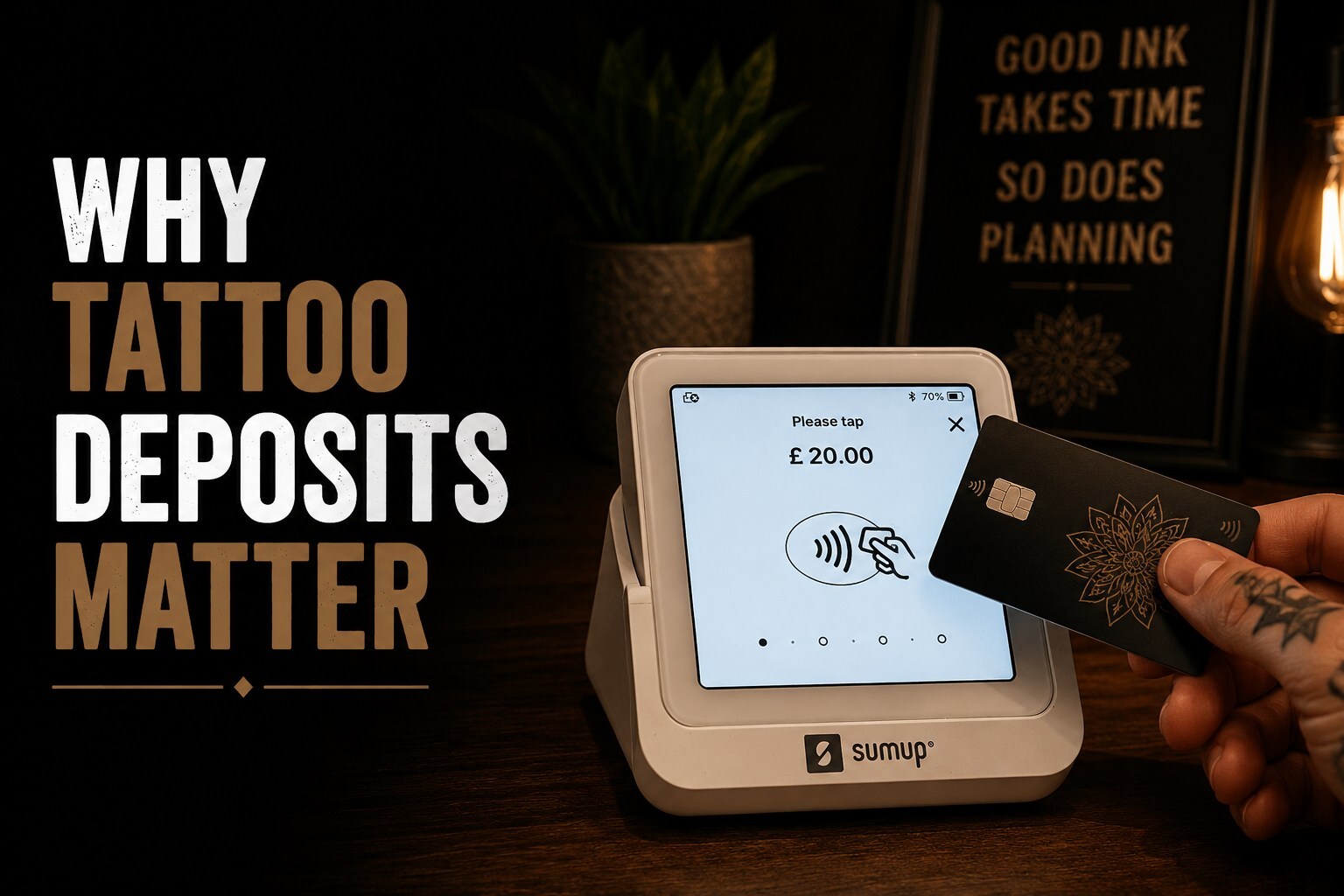
At The Inkpot, this is usually 20% of the total cost once the date is confirmed.
It isn’t a separate booking fee added on top. It forms part of the final price.
So if your tattoo costs £100, a 20% deposit would be £20, with the remaining £80 due later. The deposit is part of that £100 total, not an extra charge on top of it.
Some studios handle deposits differently, and that’s completely fine. The important thing is knowing what you’re paying, what it secures and what happens if your plans change.
Why Tattoo Studios Use Deposits
The main reason is simple: a booked appointment is reserved working time.
When an artist blocks out a three-hour session for one client, that time is no longer available to somebody else.
There may also already have been messages, consultation time and preparation involved before the appointment arrives.
If somebody cancels at the last minute or doesn’t turn up, that time can be very difficult, or sometimes impossible, to refill.
A deposit helps make the booking a genuine commitment on both sides.
You’ve committed to the appointment, and the studio has committed that time to you.
How The Inkpot Uses Deposits
At The Inkpot Studio in Ross-on-Wye, we usually ask for a 20% deposit once a date has been confirmed.
Before that point, we’ll normally have had a proper conversation about the idea, placement, size and what sort of session is likely to be needed.
Our consultations are free and include a coffee, so there’s no pressure to rush straight into a booking.
If you need time to think, take it.
Once you’re happy to go ahead and a date is agreed, the deposit is what secures that slot.
Deposits Help Give You Certainty Too
Deposits aren’t only there to protect the studio.
They also make the booking clear for you.
Once the deposit has been paid and the appointment is confirmed, you know which date is yours and can plan around it.
That might mean arranging time off work, organising travel or simply making sure you don’t accidentally book something else on the same day.
It also means the financial side is clearer. You’ve already paid part of the total cost, and you know what remains.
Sometimes the simplest benefit is just knowing that the appointment is properly booked and no longer sitting in that vague “we should sort a date” stage.
What Happens If You Need to Cancel?
Life happens, and sometimes plans change.
If you need to cancel, the most important thing is to let us know as early as you can.
With enough notice, we may be able to refund the deposit.
That becomes much harder with very late cancellations, especially the day before or on the day itself, because there may be little or no realistic chance of offering that appointment to somebody else.
This is why notice matters.
The earlier you tell us, the more options there are.
What If You Need to Reschedule?
If you need to move your appointment rather than cancel it completely, we may be able to use the existing deposit to secure the new date.
Again, this depends on being given enough notice.
A genuine reschedule arranged well in advance is very different from trying to move an appointment the day before or on the day itself.
If something comes up, get in touch as soon as you know.
We’d always rather have an early conversation than find out at the last minute.
Though of course we understand that sometimes in life the unforeseen happens, and we will always genuinely try to be accommodating and reasonable where we can.
Is the Deposit Added to the Tattoo Price?
No.
The deposit is part of the total cost.
It isn’t an extra fee for booking.
If the agreed tattoo price is £200 and you’ve already paid a £40 deposit, you haven’t suddenly made the tattoo cost £240. The £40 simply counts towards the £200 total.
This is one of the most common things people worry about if they haven’t paid a tattoo deposit before, so it’s always worth making clear.
Why Not Just Book Without One?
Because until some kind of commitment is made, a date is very easy to lose.
From the studio’s point of view, holding appointments indefinitely without deposits can mean turning away other clients for bookings that may never actually happen.
From the client’s point of view, paying the deposit confirms that the slot really is yours.
It keeps things simple.
No guessing. No “I thought that date was mine”. No holding a full afternoon open without knowing whether the booking is definite.
What If You’re Still Unsure About the Tattoo?
Then don’t rush into paying a deposit just because you feel awkward saying you need more time.
A deposit should come once you’re comfortable enough with the idea and the booking to move forward.
That doesn’t mean every tiny detail of the final design has to be completely finished beforehand.
It just means you should be happy with the overall direction and ready to secure the appointment.
If you still have questions about the design, placement, size or session length, that’s exactly what the consultation is for.
Final Thoughts
A tattoo deposit isn’t an extra charge.
It’s simply the point where an available date becomes your booked appointment.
It protects the artist’s time, gives you a confirmed slot and makes the arrangement clear for everyone.
If your plans change, tell us as early as possible. With enough notice, we may be able to refund the deposit or move it across to a new appointment date.
The key thing is communication.
If you’re unsure about any part of the process, we’re always happy to talk it through before you book.
Got a tattoo idea in mind? Book your free consultation with The Inkpot and we’ll help you turn it into something you’ll love.