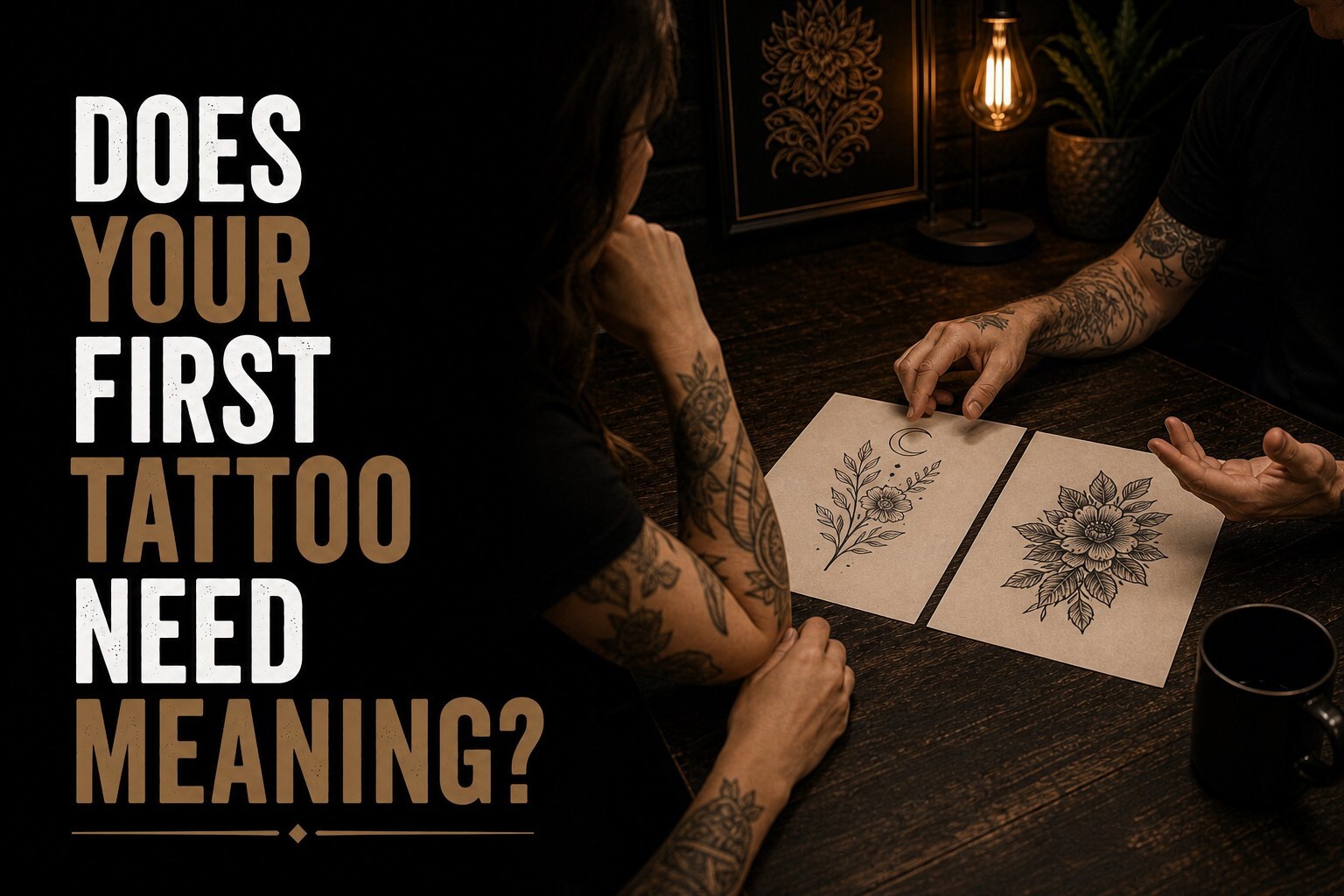
Your first tattoo can mark a person, a place or a turning point.
It can also be a lovely little frog you chose because it made you smile.
Neither reason is more legitimate than the other.
A first tattoo does not need a deep meaning to be a good tattoo. What matters is that the idea feels right for you, works well on the body and is created by an artist whose work you trust.
The Short Answer: No, It Does Not Have to Mean Something
There can be a surprising amount of pressure around a first tattoo.
Because it is your first, it can feel as though the design ought to explain who you are, capture an important chapter of your life and still feel profound in forty years’ time.
That is an impossible amount of work to give one image.
If you want a tattoo with a personal story, brilliant. If you simply love a flower, animal, pattern or piece of artwork, that is enough too. Enjoying the design is a perfectly good reason to wear it.
Why Meaning Can Be Lovely
A meaningful tattoo can feel incredibly personal.
It might remember somebody you love, represent a value, celebrate a change or give physical form to something that is difficult to put into words.
That connection can make the process feel special. It can also help when you are choosing between several ideas because you already understand why one of them matters to you.
But meaning should feel natural. You do not need to invent a grand explanation because you think other people will ask.
Do Not Force a Story Onto the Design
Sometimes searching for the “perfect meaning” makes choosing a first tattoo harder than it needs to be.
You find an image you love, then talk yourself out of it because it does not symbolise anything important. Or you choose a symbol for its supposed meaning even though you do not particularly like how it looks.
Remember that you will live with the artwork as well as the idea behind it.
If the symbolism is beautiful but the design is not something you want to see on your body, it is probably not the right choice. Meaning and appearance can work together, but one does not have to justify the other.
Meaning Can Change — and That Is Fine
People change. A symbol that feels important now may feel different in ten or twenty years.
That does not automatically turn the tattoo into a mistake.
It may become a reminder of the person you were when you chose it. A design picked purely because you liked it may gather meaning later because it reminds you of the day, the artist, the people around you or that part of your life.
You do not have to predict exactly what your future self will think. A more useful question is:
If my tastes or circumstances change, am I still comfortable with this tattoo being part of my story?
If the honest answer is yes, that is a much firmer foundation than trying to guarantee you will feel exactly the same forever.
A Tattoo Chosen for Its Looks Is Still Personal
“I just like it” can sound casual, but taste is personal.
The subjects, shapes, colours and styles you are drawn to say something about you even when there is no hidden message. Choosing artwork because it gives you joy is not shallow.
Lots of people have tattoos that are playful, decorative, strange or simply beautiful. They do not need to explain them.
Sometimes a good tattoo really can begin with, “I have always liked moths,” or, “This would look great on my arm.”
What Matters More Than Having a Deep Meaning?
Meaning is only one part of the decision. These practical choices often have a bigger effect on how happy you are with the finished tattoo.
Choose the right artist
Look through the artist’s actual portfolio, especially examples in the style you want. A talented artist is not automatically the right artist for every type of tattoo.
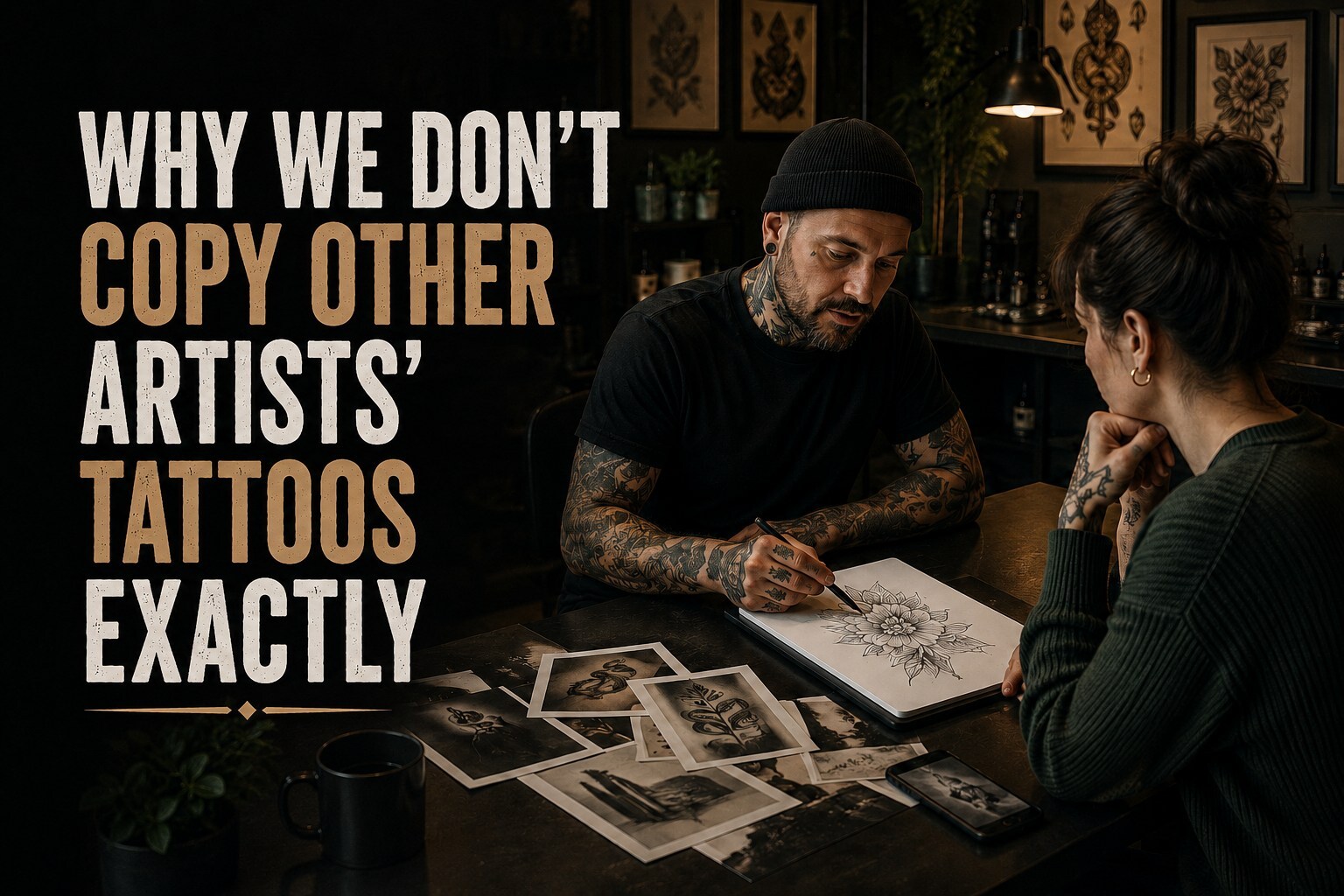
Find somebody whose existing work already has the qualities you like. That gives them room to interpret your idea in their own way instead of copying somebody else’s tattoo.
Give the design enough room
Small tattoos can be lovely, but size and detail need to make sense together.
A complicated design squeezed into a tiny area may not remain as clear as a simpler design with more breathing room. Tattoos settle and change with the skin, so your artist may recommend making the piece slightly larger or simplifying a few details.
Ask why. A good artist should be able to explain the practical reason rather than simply telling you what to do.
Think about placement in everyday life
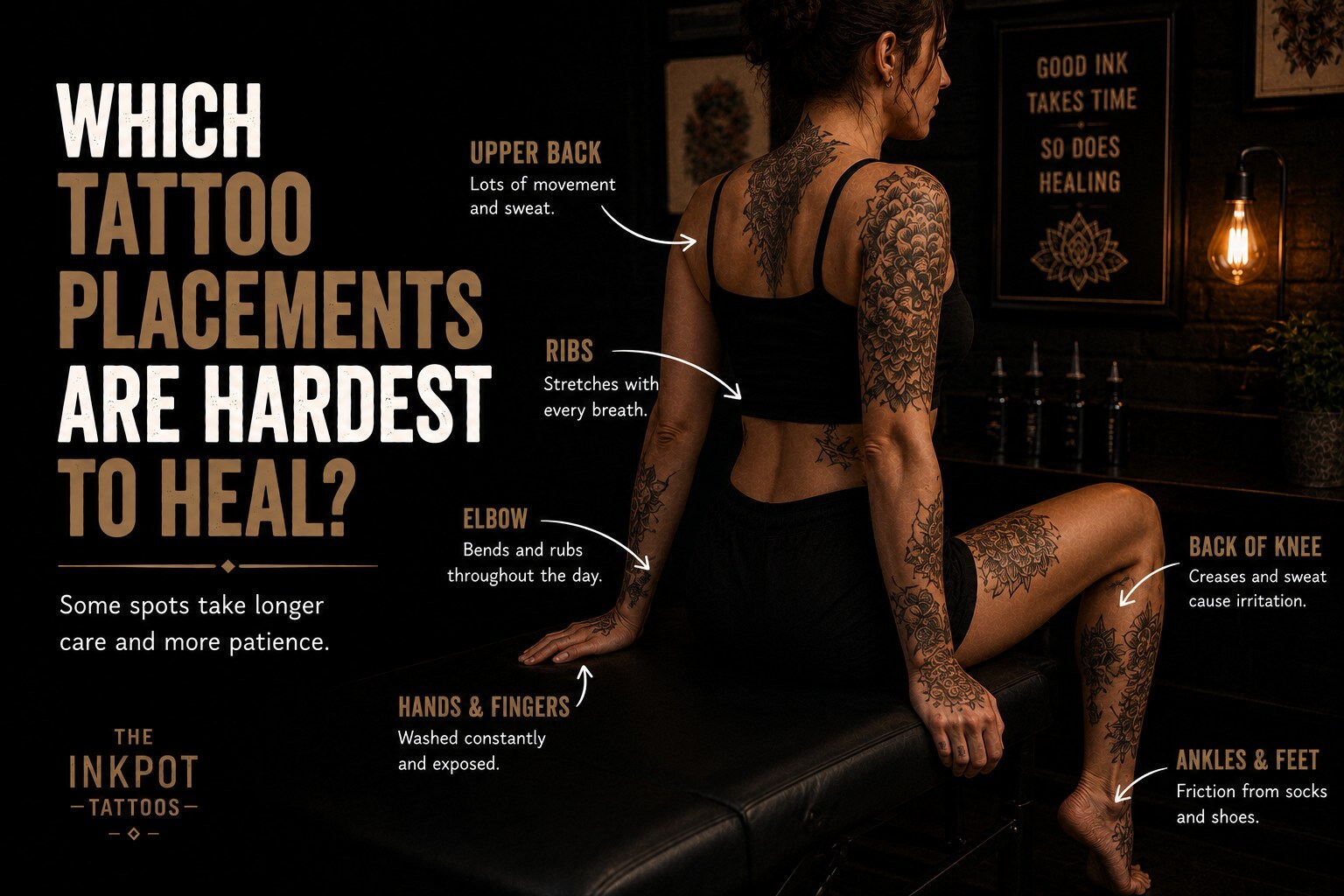
Consider visibility, clothing, work, movement and how the design follows the shape of the body.
Pain can vary between placements and between people, but fear of discomfort should not push you into a position you do not actually want. Your artist can talk you through what to expect and suggest placements that suit the design.
Skin and tattoos naturally change over time. Nobody can promise that a tattoo will remain frozen exactly as it looked on the day it was made, wherever it is placed.
Give yourself time if you are unsure
Normal nerves are not the same as doubt.
If you love the idea but feel nervous about the appointment, that is very common for a first tattoo. If you keep changing the subject, placement or style and are trying to persuade yourself to like it, give yourself more time.
There is no prize for deciding quickly.
A Few Practical First-Tattoo Checks
In England, tattooing somebody under 18 is prohibited by the Tattooing of Minors Act 1969, except for limited medical circumstances. Parental permission does not make an under-18 tattoo legal.
Choose an appropriately registered studio with good hygiene practices. Tattooing breaks the skin, and the UK Health Security Agency notes that poor practice can create infection risks, including the transmission of blood-borne viruses.
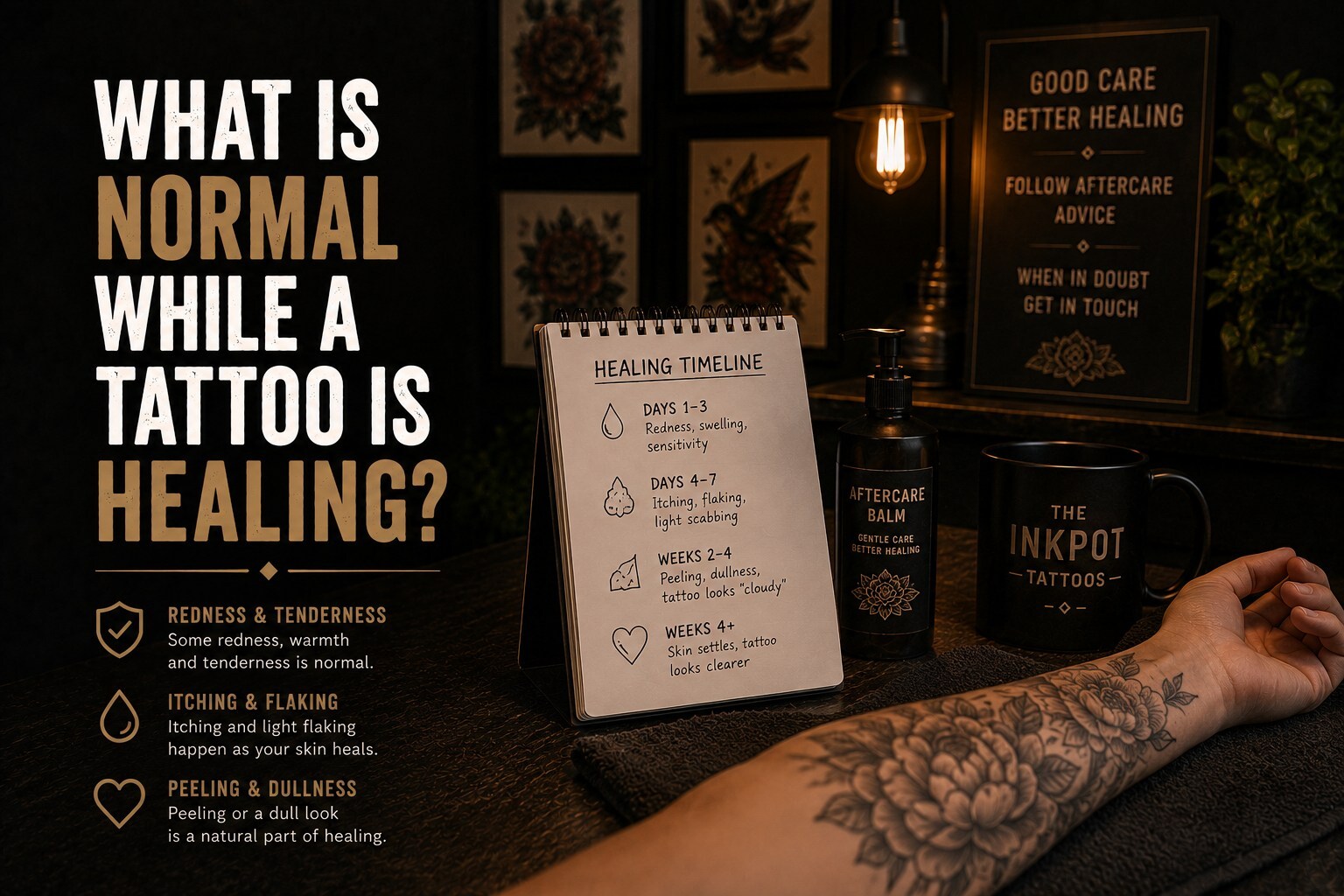
Ask about the process, tell the artist about relevant health or skin concerns and follow the aftercare instructions you are given. NHS guidance also recommends using a reputable, appropriately licensed studio and taking aftercare seriously.
Those points are not as exciting as choosing the design, but they matter far more than finding a dramatic explanation for it.
A Simple First-Tattoo Checklist
- Do I genuinely like the design?
- Am I choosing it for myself rather than to please somebody else?
- Have I looked carefully at the artist’s portfolio?
- Does the size suit the amount of detail?
- Am I comfortable with the placement and visibility?
- Have I given myself enough time to decide?
- Do I understand the appointment and aftercare process?
You do not need a perfect answer to every question before speaking to an artist. That is exactly what a consultation is for.
Talk It Through Before You Commit
Bring your ideas, even if they are still a little muddled.
A consultation gives you space to discuss the subject, style, size and placement without pretending you already know everything about tattoos.
At The Inkpot Studio in Ross-on-Wye, our consultations are free. We can help you work out whether the design needs simplifying, which placement suits it and which artist is the best fit.
There is no pressure to manufacture a deeper story, and no pressure to book before you are ready.
Final Thoughts
Your first tattoo does not have to carry the weight of your entire life.
It can honour somebody. It can mark something important. It can represent a value you want to keep close.
Or it can simply be a piece of artwork you would love to wear.
The strongest choice is the one that feels honest to you, has been thought through properly and works as a tattoo—not the one with the most impressive explanation.
Got a tattoo idea in mind? Book your free consultation with The Inkpot and we’ll help you turn it into something you’ll love.