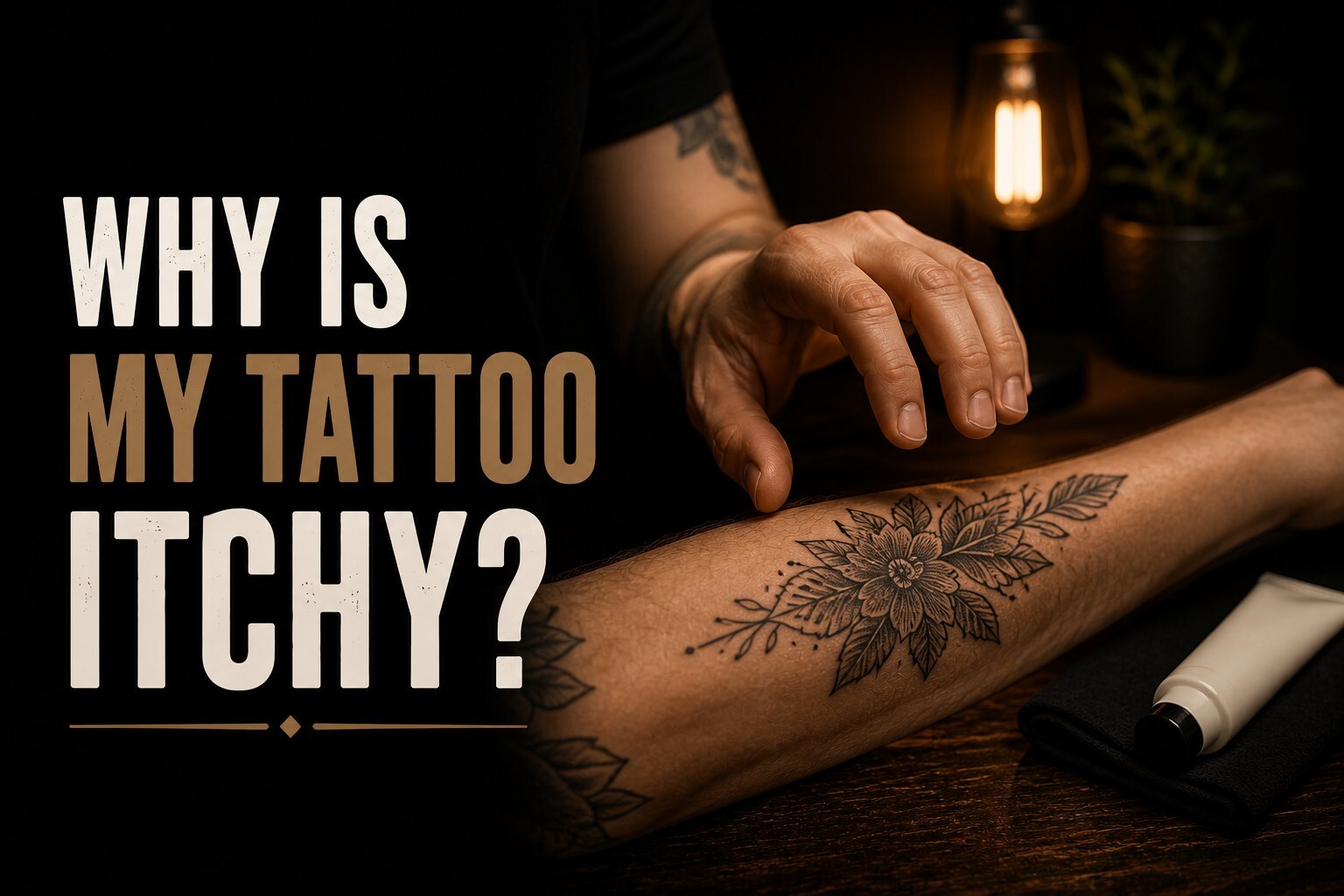
That first proper tattoo itch has a talent for arriving the second you are trying not to think about it. Your skin feels tight, the tattoo starts to flake, and suddenly scratching it seems like the only sensible idea in the world.
The reassuring answer is that some itching is a normal part of tattoo healing. A fresh tattoo is healing skin, so dryness, light flaking and an irritating tickle are common. What matters is how the tattoo looks and feels alongside the itch — and whether things are getting calmer or getting worse.
This guide explains what can be normal, what deserves medical advice, and how to make the healing stage a little less annoying without disrupting your tattoo.
The short answer: why is my new tattoo itchy?
A tattoo needle places pigment into the dermis, the layer of skin beneath the surface. Your body then gets to work repairing the skin barrier. As the area dries, settles and begins to peel, it can feel tight and itchy.
It is similar to the itch you might notice when a small graze is healing — except your new tattoo is much more tempting to stare at.
According to the American Academy of Dermatology, a little redness, swelling, soreness and clear fluid can be expected at first. Itching, flaking and scabbing may follow while the skin heals.
What normal tattoo healing can look like
Every person and every tattoo heals a little differently. Placement, size, skin type, clothing and aftercare all affect the experience. In general, a normally healing tattoo should gradually look and feel calmer rather than becoming more painful or inflamed.
You may notice:
- mild redness and tenderness around a fresh tattoo;
- a small amount of clear fluid in the early stage;
- tight or dry-feeling skin;
- light scabbing or flaking;
- an intermittent itch as the surface settles.
The exact schedule is not a competition. A small fine-line tattoo and a large, heavily worked piece will not necessarily feel the same. Follow the aftercare instructions your artist gave you for your particular tattoo and dressing.
When an itchy tattoo needs attention
Itch on its own is often part of healing. Itch alongside symptoms that are spreading or worsening is different.
Contact a healthcare professional promptly if you notice:
- redness that is getting darker, spreading or becoming more intense;
- pain, swelling or heat that is increasing rather than easing;
- yellow or green discharge, pus, an unpleasant smell or an open sore;
- red, painful bumps or a rash that is becoming worse;
- fever, chills, sweating or feeling generally unwell.
University College London Hospitals advises contacting your GP within a day if a tattoo shows signs of infection. If the area is very red or swollen, or you have a fever and cannot reach a GP within 24 hours, seek urgent medical help. If you feel seriously unwell, use NHS 111 online or call 111; call 999 for a medical emergency.
Could it be an allergic or skin reaction?
Occasionally, itching can be part of an allergy or another skin reaction rather than ordinary healing. Reactions can appear soon after a tattoo or much later. They may affect one particular ink colour and can include persistent itching, swelling, bumps, raised or scaly patches, blisters or leaking fluid.
If the itch is strong, keeps returning, is concentrated in one colour, or comes with a visible rash or change in the skin, speak to a GP or dermatologist. Do not try to diagnose the cause from photographs alone. If you develop breathing difficulty, tightness in the chest, dizziness, hives or intense swelling, seek emergency medical help.
Why scratching a healing tattoo is a bad idea
Scratching may lift scabs or peeling skin before they are ready, irritate the area and introduce bacteria from your hands or nails. It can also disturb the surface while it is healing and leave the finished tattoo looking patchy.
The same rule applies to picking. Peeling skin has an impressive ability to catch your attention, but let it come away in its own time. Your future self — and your tattoo artist — will thank you.
How to make tattoo itching more manageable
The best approach is pleasantly unglamorous: keep the area clean, avoid irritating it and stick to the aftercare plan you were given.
Wash your hands first
Always clean your hands before touching your tattoo or its dressing. Wash the tattoo gently as instructed by your artist, using lukewarm water and the recommended cleanser. Do not scrub it, and pat it dry with clean disposable paper rather than rubbing it with a towel.
Use only the recommended amount of aftercare product
If your artist has advised a fragrance-free moisturiser or tattoo aftercare product, use a thin layer. More is not better: a thick coating can leave the skin soggy and uncomfortable. Avoid perfumed products and do not apply antibiotic, antiseptic or steroid creams unless a qualified healthcare professional specifically tells you to.
Choose loose, clean clothing
Tight waistbands, cuffs and rough fabrics can rub against a healing tattoo all day. Loose, breathable clothing helps reduce friction and gives the area a little space.
Keep it cool — but do not improvise
Heat and sweat can make itching feel more noticeable. Keep the room comfortable and avoid strenuous activity if it causes the tattoo to rub or become excessively sweaty. Do not put ice directly on the skin or add home remedies to a fresh tattoo. If you are considering anything outside your aftercare instructions, ask your artist or a healthcare professional first.
Avoid soaking and sun exposure
Until the tattoo has healed, avoid baths, swimming pools, hot tubs and saunas. A quick shower is different from soaking. Keep a fresh tattoo out of direct sun, and once it is fully healed, protect it with a high-SPF sunscreen to help the artwork age well.
What if an older tattoo suddenly becomes itchy?
An old tattoo that suddenly starts itching is not going through the normal healing stage again. Dry skin may be the culprit, but a reaction to pigment, an unrelated skin condition or another irritation is also possible.
If there is no visible change and the itch settles quickly, simple fragrance-free moisturising may help. If it persists, keeps returning, affects one colour, or comes with redness, swelling, bumps, scaling or blisters, arrange medical advice. The US Food and Drug Administration also recommends contacting both a healthcare professional and the tattoo artist if a tattoo is not healing properly or develops a rash, redness or bumps.
When to contact The Inkpot
If you are unsure whether your tattoo is following the aftercare plan, you are welcome to contact the studio. Clear photographs and a description of when the symptoms started can help us understand what you are seeing.
We can offer tattoo aftercare guidance, but tattoo artists cannot diagnose infection, allergy or another medical condition. If you have worsening symptoms, fever, significant swelling, discharge, severe pain or you simply feel something is not right, contact a healthcare professional promptly.
Final thoughts
A little itching and flaking can be a perfectly ordinary part of healing. The aim is to leave the tattoo alone, keep it clean and follow the aftercare advice for your dressing and skin. What should not be ignored is a tattoo that is becoming increasingly red, painful, hot, swollen or weepy, or an itch that arrives with a persistent rash.
When in doubt, ask. It is always better to check than to spend the evening conducting increasingly dramatic internet searches with one hand hovering over your tattoo.
This article offers general information and is not a medical diagnosis. Follow the aftercare instructions supplied by your tattoo artist and seek qualified medical advice if you are concerned.
Got a tattoo idea in mind? Book your free consultation with The Inkpot and we’ll help you turn it into something you’ll love.