Getting your first tattoo can feel like a big step, especially when you’re not quite sure what to expect.
It’s also very easy to overthink it. What should you eat beforehand? How much will it hurt? What if you change your mind about the placement? What should you wear? And what on earth are you supposed to do with it once you get home?
The good news is that preparing for your first tattoo is actually pretty simple. You don’t need to memorise a huge list of rules or become an expert in tattooing before your appointment.
Take care of the things you can control, ask questions when you’re unsure, and let your artist help with the things you don’t need to figure out by yourself.
Understanding What Actually Happens at a Tattoo Appointment
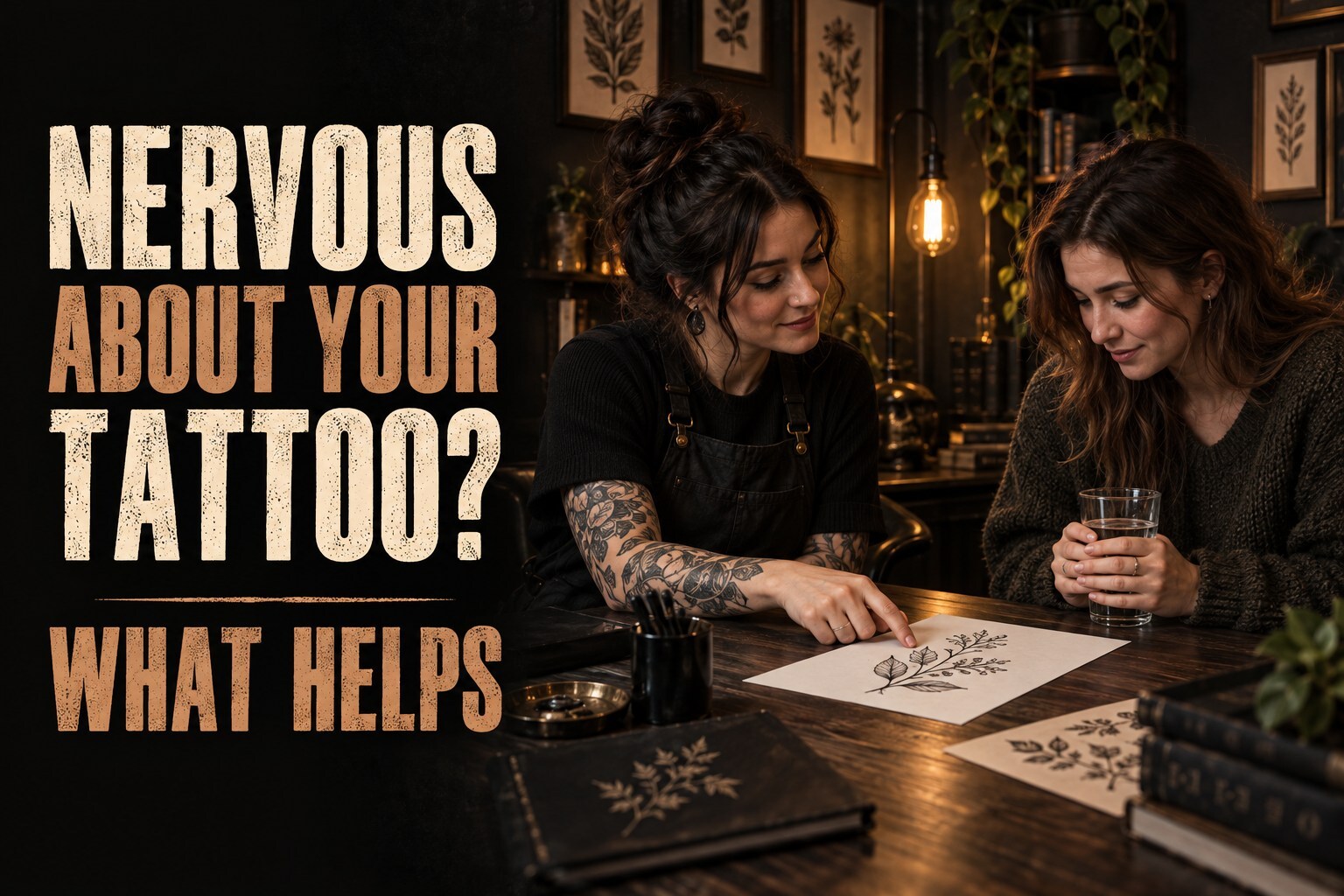
One of the easiest ways to make your first tattoo feel less daunting is simply knowing roughly what’s going to happen.
You won’t normally walk through the door and immediately have someone start tattooing you.
Before anything permanent happens, there should be time to look over the design, confirm the size and talk about exactly where it’s going. The area will then be prepared and, in most cases, a stencil will be positioned so you can see how the tattoo actually sits on your body.
This is your opportunity to look at it properly.
Move around. Look in the mirror. See how it looks when you’re standing naturally rather than twisting yourself into an odd position to inspect it.
And if you don’t like the placement, say something.
You are absolutely allowed to ask for a stencil to be moved. Your artist would much rather reposition it before tattooing starts than have you quietly staring at it afterwards wishing you’d spoken up.
The same applies throughout the appointment. If you need to adjust your position, take a short break or simply want to know what’s happening next, just ask.
The process should feel collaborative, not like something being done to you without any input.
You Don’t Need to Know Exactly What You Want Yet
Some people come to us with a very clear idea. They know the subject, style, placement, approximate size and sometimes even the colours they want.
Others have three screenshots, half an idea and a sentence that begins with, “I don’t really know how to explain this, but…”
Both are completely normal.
You don’t need to design your own tattoo before speaking to an artist. That’s part of what the artist is there for.
Reference images are useful because they help communicate what you’re drawn to. You might love the composition of one tattoo, the colours in another and the shading style from something completely different.
Tell your artist what you like about the references rather than simply handing over a picture and asking for that exact tattoo. It gives them much more useful information about what you actually want.
And your tattoo doesn’t need to have some enormous meaning behind it either.
Meaningful tattoos can be wonderful. So can tattoos you got because you really like frogs.
There’s no entrance exam.
Be Careful With Reference Images
The internet gives us access to an almost ridiculous amount of tattoo inspiration, which is both brilliant and occasionally confusing.
Pinterest, Instagram and Google can all be useful places to start, but try to think of the images you save as inspiration rather than a catalogue to order from.
Another artist’s tattoo can show the style, composition or feeling you’re looking for without needing to be copied exactly.
The same applies to AI-generated artwork. It can be useful for exploring an idea visually, but AI images can contain strange anatomy, impossible details and shapes that look convincing at first glance but don’t actually make much sense when you look closely.
That doesn’t make the reference useless. It just means your artist may need to interpret it and turn the useful parts into something that actually works as a tattoo.
You also don’t need dozens of references. If you already know roughly what you want, one or two strong examples can sometimes communicate far more clearly than a folder containing fifty slightly different tattoos.
Think About Placement and Size Early
You don’t need to decide the exact size of your tattoo at home with a ruler.
It is worth thinking about where you might like it, though.
Placement affects far more than where the tattoo happens to sit. The shape of the area, how much room is available and how the body moves can all influence how a design works.
Size matters for similar reasons.
If a design contains lots of tiny details, squeezing everything into a very small space can leave those details with nowhere to go as the tattoo naturally settles and ages.
That doesn’t mean every tattoo needs to be huge. It means the amount of detail needs to make sense for the size.
A good artist should be able to explain this rather than simply telling you that something “won’t work”. They may suggest going slightly larger, simplifying part of the design or changing the placement while keeping the idea itself intact.
You don’t have to arrive knowing the answer. This is exactly the sort of thing a consultation is useful for.
Make Use of Your Consultation
A consultation shouldn’t feel like a sales pitch or an interview.
It’s simply a chance for you and the artist to sit down, look at the idea together and work out what makes sense before anybody commits to anything.
Bring your references. Explain what you like. Mention anything you definitely don’t want. If there’s something you’re unsure about, say that too.
You can talk about style, placement, size, colour, pricing and roughly how long the tattoo might take. If it’s your first tattoo and you’re nervous about pain, tell them. If you’re worried that you might struggle with a long session, mention that as well.
There are no bonus points for pretending you’re completely relaxed when you aren’t.
Your artist may suggest changing something about the original idea. That doesn’t automatically mean they’re trying to take over the design.
Sometimes a small change gives details more room. Sometimes moving the tattoo slightly helps it sit better on the body. Sometimes an idea that looks fantastic on a phone screen simply needs adapting before it becomes a tattoo.
At The Inkpot Studio in Ross-on-Wye, consultations are free and currently include a coffee. The point is to give you enough time to talk everything through without feeling like you need to make a decision on the spot.
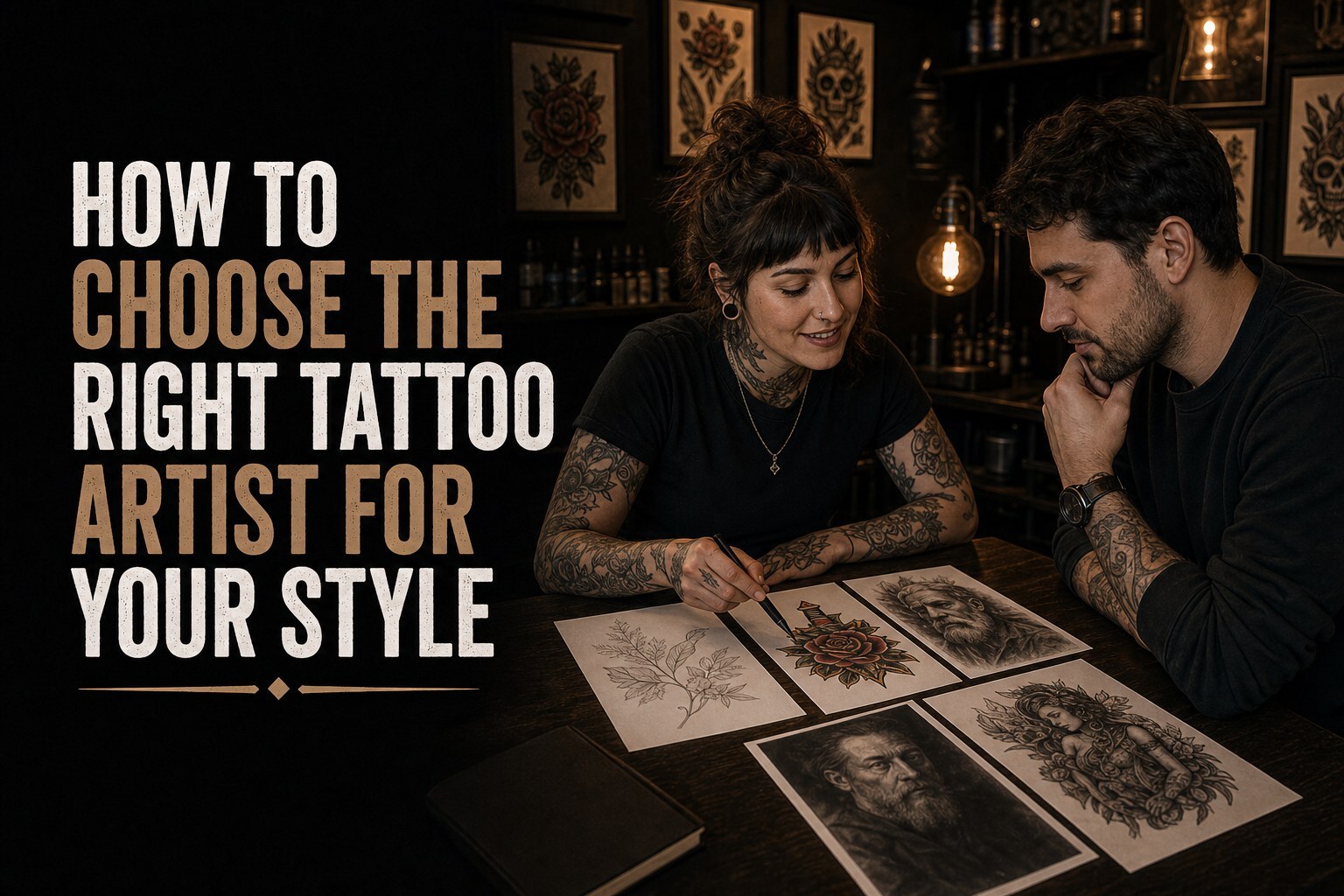
Choose an Artist Whose Work Actually Suits Your Idea
Preparing for your first tattoo also means choosing the right person to do it.
Don’t choose an artist purely because they’re nearby, available next week or slightly cheaper.
Spend some time looking through their portfolio.
If you want realism, look at their realism. If you love colour work, look at how they use colour. If you want something very delicate, look for examples of delicate tattoos they’ve actually produced.
Every artist develops strengths and preferences. Someone can be a very good tattoo artist and still not be the right artist for your particular idea.
That’s completely fine.
You’re not looking for the person who claims they can do everything. You’re looking for someone whose work makes you think, “Yes. That’s the sort of tattoo I want.”
You should feel comfortable speaking to them too. You’re going to be trusting this person with something permanent, so being able to ask questions and say when you’re unsure matters.
Preparing for the Day
You don’t need a complicated pre-tattoo routine.
The boring stuff helps the most.
Try to get a decent night’s sleep beforehand. Eat a proper meal before your appointment and make sure you’re hydrated. Tattoo sessions can be tiring, particularly if you’re sitting for several hours, and arriving hungry and exhausted won’t make the experience any easier.
Wear something comfortable that gives your artist easy access to the area being tattooed.
If you’re having your thigh tattooed, for example, tight jeans probably aren’t going to be particularly useful. Likewise, think about whether clothing is likely to rub against the fresh tattoo afterwards.
For longer appointments, bring a drink and anything you might want to keep yourself occupied.
Some people talk for most of their tattoo. Some put headphones in and watch something. Some scroll through their phone. Some barely say a word.
There isn’t a correct way to be tattooed.
What About Pain?
For many first-timers, this is the big one.
Unfortunately, nobody can tell you exactly how much your tattoo is going to hurt.
Pain is incredibly individual. Placement makes a difference, but so does the person being tattooed. Two people can have tattoos in exactly the same area and describe the experience completely differently.
That’s why reading endless pain rankings online can sometimes make people more nervous rather than less.
Some areas are generally considered easier than others, and very bony or sensitive placements can be more uncomfortable, but there’s no universal pain score that can tell you exactly what your experience will be.
If pain is something you’re particularly worried about, tell your artist. They can talk through the placement with you and help you understand what to expect without pretending they can guarantee how it will feel.
And once the tattoo starts, you don’t get extra points for suffering quietly.
If you genuinely need a short break, say so.
Being Nervous Is Completely Normal
You can be absolutely certain that you want the tattoo and still feel nervous when the appointment arrives.
Those two things aren’t contradictory.
For a first tattoo, there are lots of unknowns all happening at once. You don’t know exactly what the sensation feels like yet. You don’t know what sitting for the session will be like. And you’re about to make a permanent change to your body.
Of course that can produce a few nerves.
A good studio should never make you feel silly for asking questions, needing reassurance or admitting that you’re nervous.
Often, the anticipation is the bit people find hardest. Once the tattoo has actually started and you know what the sensation feels like, there’s one less unknown to worry about.
Know the Basics of Aftercare Before You Leave
You don’t need to become an expert in tattoo healing before your appointment, but you should leave the studio knowing what you’re supposed to do next.
At The Inkpot, we normally use second skin where the placement allows it. Your artist will explain how long to leave it on and what to do once it comes off.
After that, things are generally pretty simple: keep the tattoo clean, give it some air and use only a very thin layer of gentle moisturiser when needed.
More product is not better.
A fresh tattoo can go through a few stages while it heals. Some initial redness and tenderness can be normal. Later you may notice dryness, itching or flaking.
Try not to compare your tattoo day-by-day with somebody else’s. Skin varies and healing isn’t identical for everyone.
If something seems to be getting worse rather than gradually settling, or you’re genuinely concerned about how the tattoo is healing, don’t sit at home trying to diagnose it from photographs online. Contact the studio and seek medical advice where appropriate.
The boring advice is usually the advice that works: keep it clean, don’t smother it in products and give your skin time to heal.
Don’t Plan Too Much Immediately Afterwards
It’s also worth thinking about what you’re doing in the days after your tattoo rather than only preparing for the appointment itself.
A fresh tattoo is healing skin, so give yourself a little room to look after it properly.
That might mean thinking ahead if you have swimming, a holiday, lots of sun exposure, strenuous exercise or anything else planned that could interfere with healing.
You don’t need to put your entire life on hold, but mentioning upcoming plans to your artist can help you decide whether the timing of the appointment makes sense.
Sometimes waiting another couple of weeks is much easier than trying to work a fresh tattoo around plans you already have.
You Can Change Your Mind
This is something first-time clients sometimes need to hear.
You can change your mind.
You can change your mind about the size. You can ask to move the stencil. You can decide you prefer one version of the design over another.
And if something genuinely doesn’t feel right, you can decide not to go ahead.
Obviously, once tattooing has started, things are rather different. But before that point, you should feel comfortable speaking up.
A tattoo is going to be on your body. Being polite does not mean staying quiet about something that matters to you.
At the same time, listen when your artist explains why they’re recommending something. The best result usually comes from your idea and their experience working together rather than either person having complete control.
You Don’t Need to Have Everything Figured Out
Probably the most important thing to remember before your first tattoo is that you’re not expected to already understand tattooing.
You don’t need to know every tattoo style by name.
You don’t need to know what needle your artist will use.
You don’t need to work out the exact dimensions at home.
You don’t need to know precisely how long it will take.
And you definitely don’t need to pretend you aren’t nervous.
Your job is to explain what you like, what you’re unsure about and what you’re hoping to end up with.
Your artist’s job is to help turn that into something that works properly as a tattoo.
Do the simple preparation: eat, drink, sleep, wear something sensible and ask the questions that are bothering you.
The rest can be worked out together.
Final Thoughts
Your first tattoo doesn’t need weeks of stressful preparation.
Choose an artist whose work you genuinely like. Talk your idea through properly. Listen to their advice, but speak up about the things that matter to you. Look after yourself before the appointment and follow the aftercare guidance afterwards.
Most importantly, don’t feel as though you’re supposed to already know how all of this works.
It’s your first tattoo.
You’re allowed to have questions.
If you’d like to talk your first tattoo through before booking anything, we’re always happy to help.
Got a tattoo idea in mind? Book your free consultation with The Inkpot and we’ll help you turn it into something you’ll love.