Yes — you can usually shower after getting a tattoo.
The important bit is not choosing a magic number of hours. It is knowing what kind of dressing you have, when your artist told you to remove it and how to wash the tattoo once it is exposed.
A quick, gentle shower is very different from soaking in a bath. Keep the water lukewarm, use clean hands, avoid scrubbing and follow the instructions you were given for your particular tattoo and covering.
Here is the practical version.
The short answer: check the dressing first
If your tattoo is covered, do not remove the dressing simply because you want a shower.
Different coverings are designed to stay on for different lengths of time. A simple temporary wrap may be removed relatively soon, while a sealed adhesive film may be intended to remain in place for several days. The tattoo’s size, placement, how much it is weeping and your skin can all affect the advice.
Follow the timing your artist gave you. If you have forgotten it, contact the studio rather than borrowing a routine from somebody else’s tattoo.
The NHS-affiliated FYI Norfolk tattoo guidance also notes that dressings vary and that some medical adhesive coverings are designed to stay on for several days.
Can you shower with an adhesive tattoo film on?
Often, yes — provided the film is still properly sealed and its instructions allow it. Water-resistant does not mean suitable for a long soak, however.
Keep the shower brief and avoid aiming a strong jet at the tattoo or the edges of the film. Do not scrub over it. If water gets underneath, the seal lifts, fluid leaks out or the skin becomes increasingly uncomfortable, contact your artist for advice about removing or replacing it.
Do not improvise with household cling film or rewrap an exposed tattoo unless your artist has specifically instructed you to do so.
When can you shower after the dressing comes off?
You do not normally need to leave an uncovered tattoo sitting for hours before washing it. Once the covering is removed at the time advised, gentle cleaning is part of keeping the area hygienic.
The exact timing still belongs to your artist’s instructions because they know which dressing was used and how the tattoo was completed. What matters is that you do not peel off a dressing early merely to shower, and that you do not leave an exposed tattoo dirty because you are frightened of water.
What to prepare before your first shower
You do not need a collection of expensive tattoo products. You do need clean hands and a reasonably sensible bathroom.
- Wash your hands before touching the dressing or tattoo.
- Have clean disposable paper towel ready for drying.
- Use the mild, fragrance-free cleanser recommended by your artist, if they have advised one.
- Keep flannels, loofahs, exfoliating gloves and sponges away from the tattoo.
- Make sure any aftercare product you plan to use is the one your artist recommended.
This is aftercare, not a spa day. The scented scrub, bath bomb and enthusiastic exfoliation can sit this one out.
How to wash a new tattoo in the shower
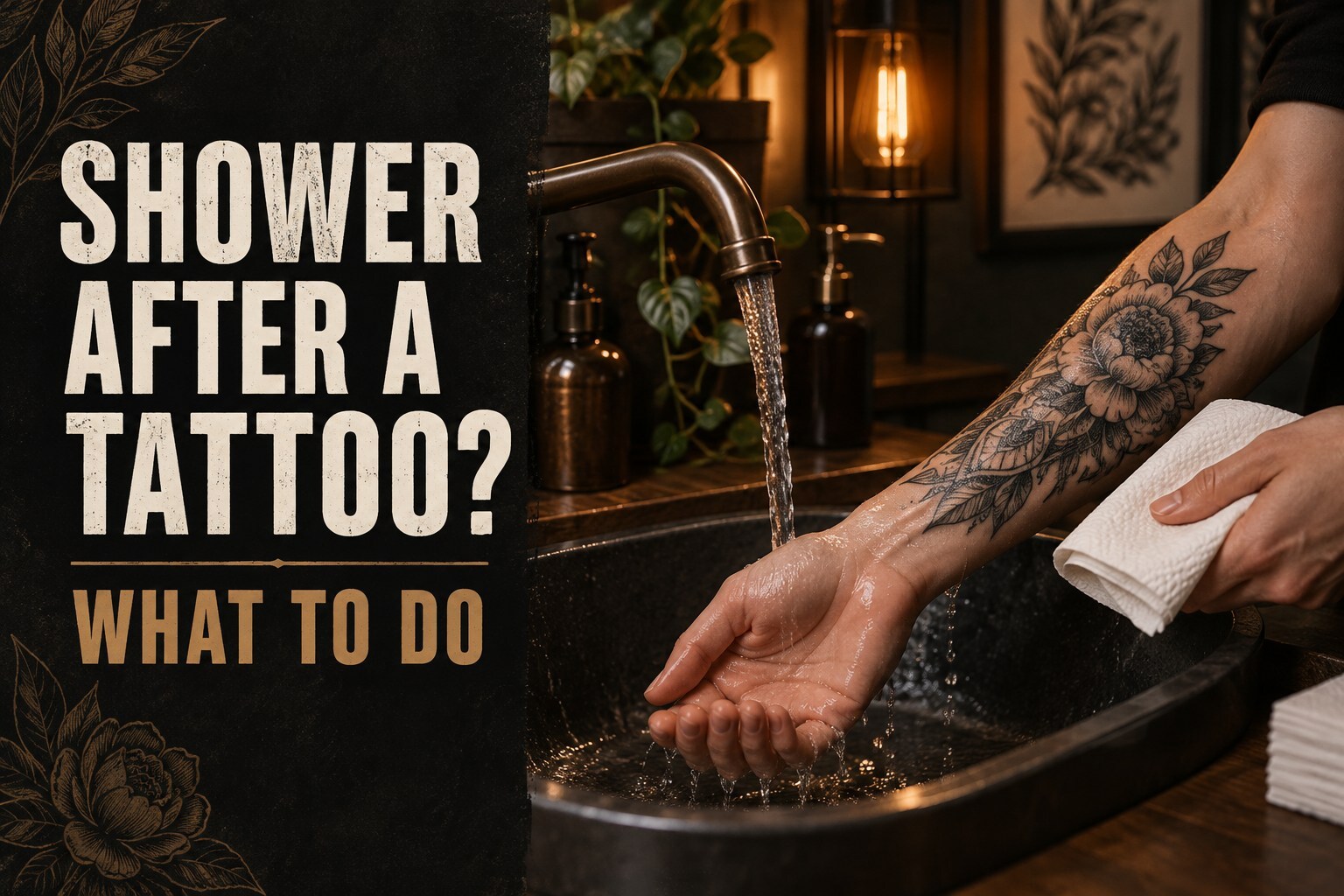
- Use lukewarm running water. Very hot water can feel uncomfortable and irritate already tender skin. You do not need to “open” or “close” your pores; that is not how tattoo healing works.
- Keep the shower fairly short. The aim is to clean the tattoo without leaving the skin wet and softened for a long time.
- Avoid a forceful direct spray. Let water run gently over the area or guide it with a clean hand.
- Clean with your hands only. If advised, lather a small amount of mild, fragrance-free soap in your clean hands and gently pass it over the tattoo. Do not scrub.
- Rinse away the cleanser. Do not leave a soapy film sitting on the skin.
A small amount of clear fluid, plasma or excess surface ink can be normal early on. Gentle washing removes material from the surface; it does not wash the tattoo out of your skin. Tattoo pigment sits below the surface. Picking, repeated friction, severe irritation or infection are the things more likely to interfere with healing.
The UK Health Security Agency’s tattooing and body-piercing guidance stresses infection prevention, good hygiene and appropriate aftercare. Your artist’s written instructions should turn those principles into a routine for your particular tattoo.
How should you dry it?
Pat the tattoo dry gently with clean disposable paper towel. Do not rub it with a bath towel, and do not use the towel everybody else has been drying their hands on all week.
Give the skin a moment to become fully dry. If your artist has recommended an aftercare product, apply only the amount instructed with clean hands. A thin layer is usually the idea; the tattoo should not be buried under a shiny coating.
Put on loose, clean clothing if the area needs to be covered by fabric. Avoid anything tight, rough or likely to rub.
What should you avoid while the tattoo heals?
A shower lets water run over the skin. Soaking keeps the tattoo underwater, softens the healing surface and can expose it to irritants or bacteria. Until the tattoo is fully healed, avoid:
- baths;
- swimming pools;
- hot tubs and jacuzzis;
- rivers, lakes and the sea;
- saunas and steam rooms;
- long, very hot showers;
- shaving, scrubbing or exfoliating the area.
Healing time varies with the tattoo, placement, skin and aftercare. Do not use a fixed calendar date as permission to swim if the area is still peeling, scabbed, sore or otherwise unsettled.
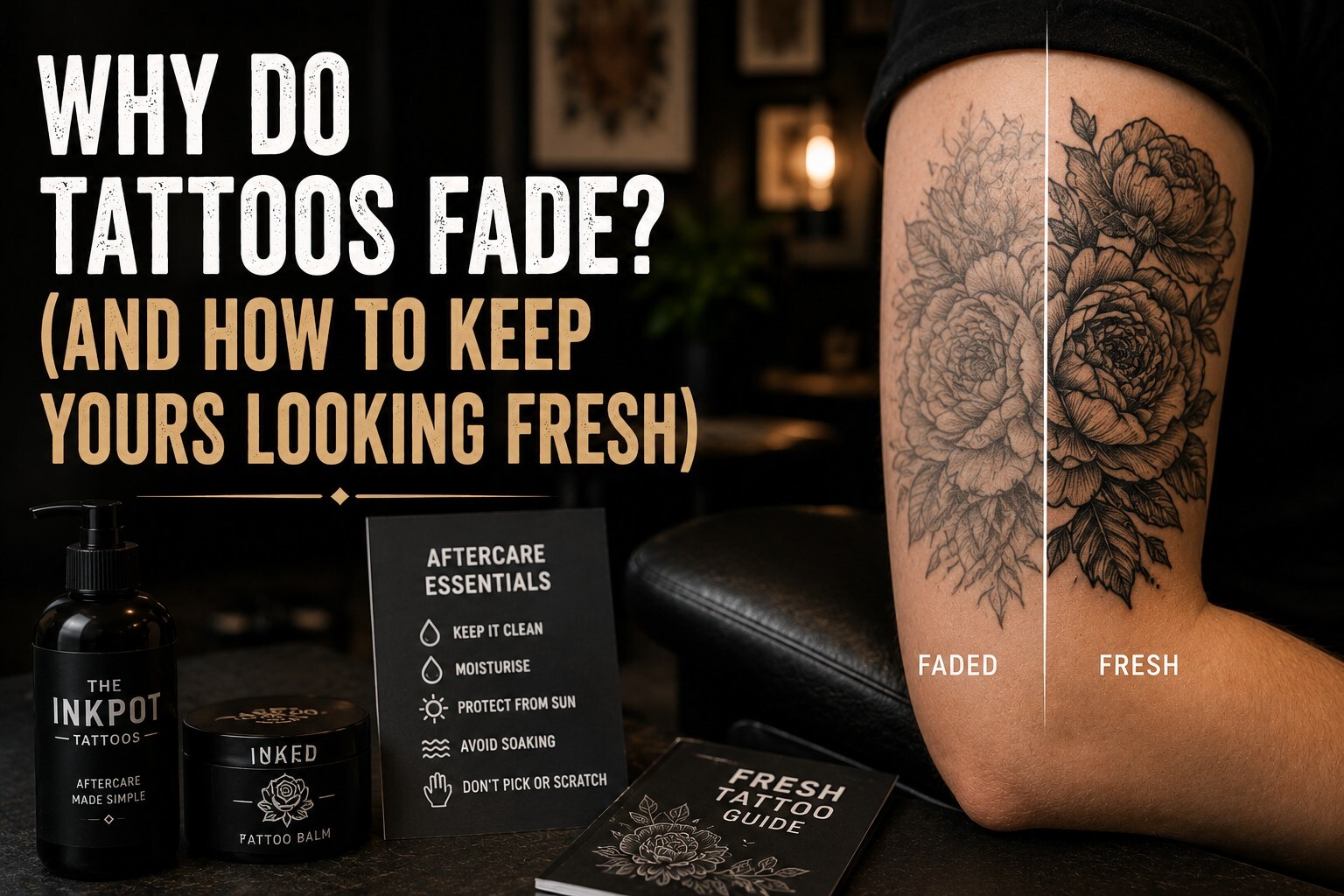
For more of the gloriously unexciting things that help, read our guide to tattoo aftercare mistakes to avoid.
What can be normal after washing?
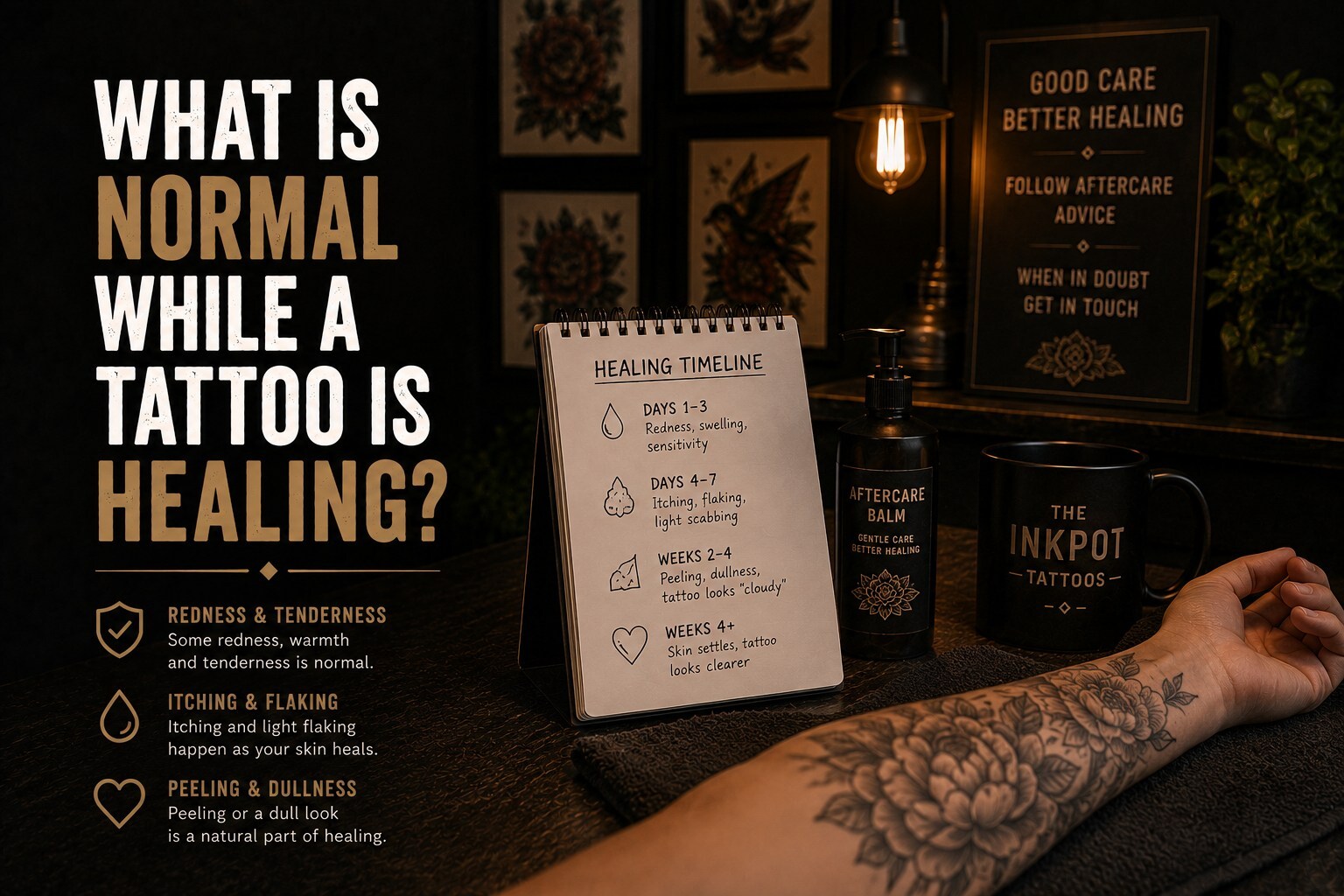
A fresh tattoo may be mildly red, tender or swollen. It can release a little clear fluid at first, then later feel dry, itchy or flaky. It should generally become calmer as it heals rather than increasingly painful, hot or inflamed.
If the appearance is making you nervous, our guides to what is normal while a tattoo heals and why a tattoo can feel itchy explain the usual stages in more detail.
When should you get medical advice?
Speak to a healthcare professional promptly if redness is spreading or becoming darker, pain or swelling is worsening, the area is increasingly hot, or you notice pus, an unpleasant smell, open sores, fever, chills or feel generally unwell.
The University College London Hospitals guidance advises contacting a GP within a day if a tattoo shows signs of infection. If the area is very red or swollen, or you have a fever and cannot access a GP within 24 hours, seek urgent medical help. You can use NHS 111 online or call 111; call 999 for a medical emergency.
Do not stop basic hygiene and wait for an infection to disappear. Your tattoo artist can help with routine dressing and aftercare questions, but they cannot diagnose or treat an infection, allergy or other medical condition.
A quick first-shower checklist
- Follow the removal time for your actual dressing.
- Wash your hands before touching the tattoo.
- Use a short, lukewarm shower.
- Avoid a strong jet, scrubbing and scented products.
- Wash gently with clean hands and the advised cleanser.
- Pat dry with clean disposable paper towel.
- Use only a thin layer of the recommended aftercare product.
- Do not soak the tattoo until it is fully healed.
- Get medical advice if symptoms are worsening rather than settling.
Final thoughts
Showering after a tattoo does not need to become a ceremonial event involving three timers and a laboratory coat.
Check the dressing instructions, keep the shower short and lukewarm, wash with clean hands and dry the area without rubbing. Then leave the tattoo to heal without soaking, scrubbing or experimenting with whatever product the internet has become excited about this week.
If anything about your covering or routine is unclear, contact your artist. If you are worried about infection or another reaction, contact a healthcare professional.
This article offers general information and is not a medical diagnosis. Follow the aftercare instructions supplied for your tattoo and seek qualified medical advice if you are concerned.
Got a tattoo idea in mind? Book your free consultation with The Inkpot and we’ll help you turn it into something you’ll love.