There’s a certain buzz when a tattoo is new. It looks crisp, rich, almost like it’s been printed onto your skin. You catch it in the mirror, in the car window, in the reflection of a kettle, and you think: yeah… that’s the one.
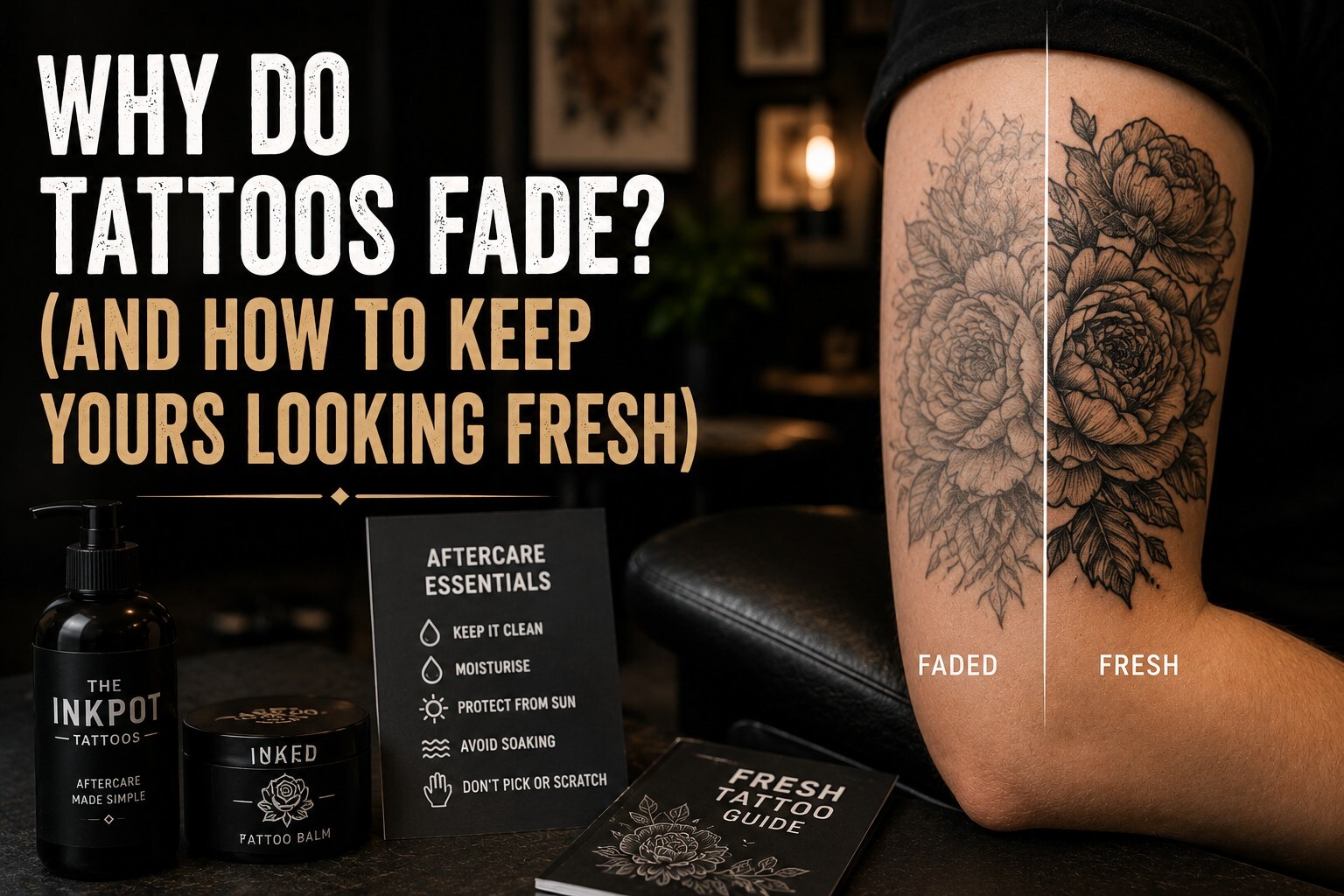
Then a bit of time passes and you notice something subtle. Blacks don’t look quite as deep. Colours aren’t shouting like they did. Fine details feel a touch softer than day one. If you’ve invested in a piece you love, that can feel a bit gutting.
So first — and we mean this kindly — tattoos fading is normal. It doesn’t automatically mean you’ve done something wrong, and it doesn’t mean your artist did a poor job. Ink settles, skin changes, and life happens. What matters is how it fades, and how gracefully it ages. The good news is you can slow down the “tired” kind of fading with a few simple habits.
What “fading” actually is
Tattoo ink doesn’t sit on top of your skin like paint. It’s placed into the dermis (the layer under the surface). Your body then does what it’s designed to do: it tries to tidy up anything it sees as “not you.” Some pigment stays put. Some is gradually carried away over time. And as your skin heals and renews itself, the way light hits the tattoo changes too.
That’s why fading is usually a mix of things: the tattoo can get a little lighter overall, edges can soften slightly, and certain colours can drop off faster than others. None of that is automatically bad. In fact, a well-done tattoo often looks better once it’s properly settled — less “shiny and fresh” and more like it belongs on you.
The biggest culprit is also the most boring: the sun
If there’s one thing that ages tattoos faster than anything else, it’s UV exposure.
Sunlight breaks pigments down, and it also ages the skin itself — and your tattoo lives inside your skin. Even the best tattoo in the world can start looking washed out if it’s always out in the sun with no protection.
Colour shows this most clearly. Lighter tones like yellows, pinks and some reds tend to lose punch sooner. Blacks generally hold best, but black and grey realism will still soften faster if it’s constantly catching rays.
Here’s the unglamorous truth that makes the biggest difference: if your tattoo is exposed, treat it like your face. Sunscreen isn’t an “extra.” It’s part of the tattoo.
Your skin changes, even if you don’t
Another truth people don’t love hearing: skin changes over time. It loses elasticity, texture shifts, dryness becomes more common, and healing can be slower as the years roll on. Even if your weight stays stable, your body still moves through seasons, stress, sleep patterns, and life — and your skin reflects that.
This is why tattoos that age best are usually the ones designed with aging in mind. Strong contrast holds. Clear shapes hold. Designs with breathing space hold. Tattoos that rely on ultra-micro details to “make” the image can look jaw-dropping fresh, but they have less margin for time to do its thing.
We’re not saying “don’t get fine detail.” We’re saying: choose detail that can survive becoming a little softer.
Technique matters more than people realise
Sometimes tattoos fade faster because the ink wasn’t placed into the skin in the most stable way. Ink that’s too shallow can lose intensity sooner. Ink that’s too deep can heal softer than intended. Overworked skin can heal patchy. All of that affects longevity.
This is one of the reasons we always say: don’t judge a tattoo by fresh photos alone. Fresh work can look incredible even if it doesn’t heal brilliantly. Healed work is where the truth lives — it shows how an artist’s blacks sit, how gradients settle, how lines hold, and how the tattoo looks when it’s actually living on someone.
If you’re shopping for an artist, ask to see healed pieces. It’s not rude. It’s smart.
Placement plays a role (even with perfect aftercare)
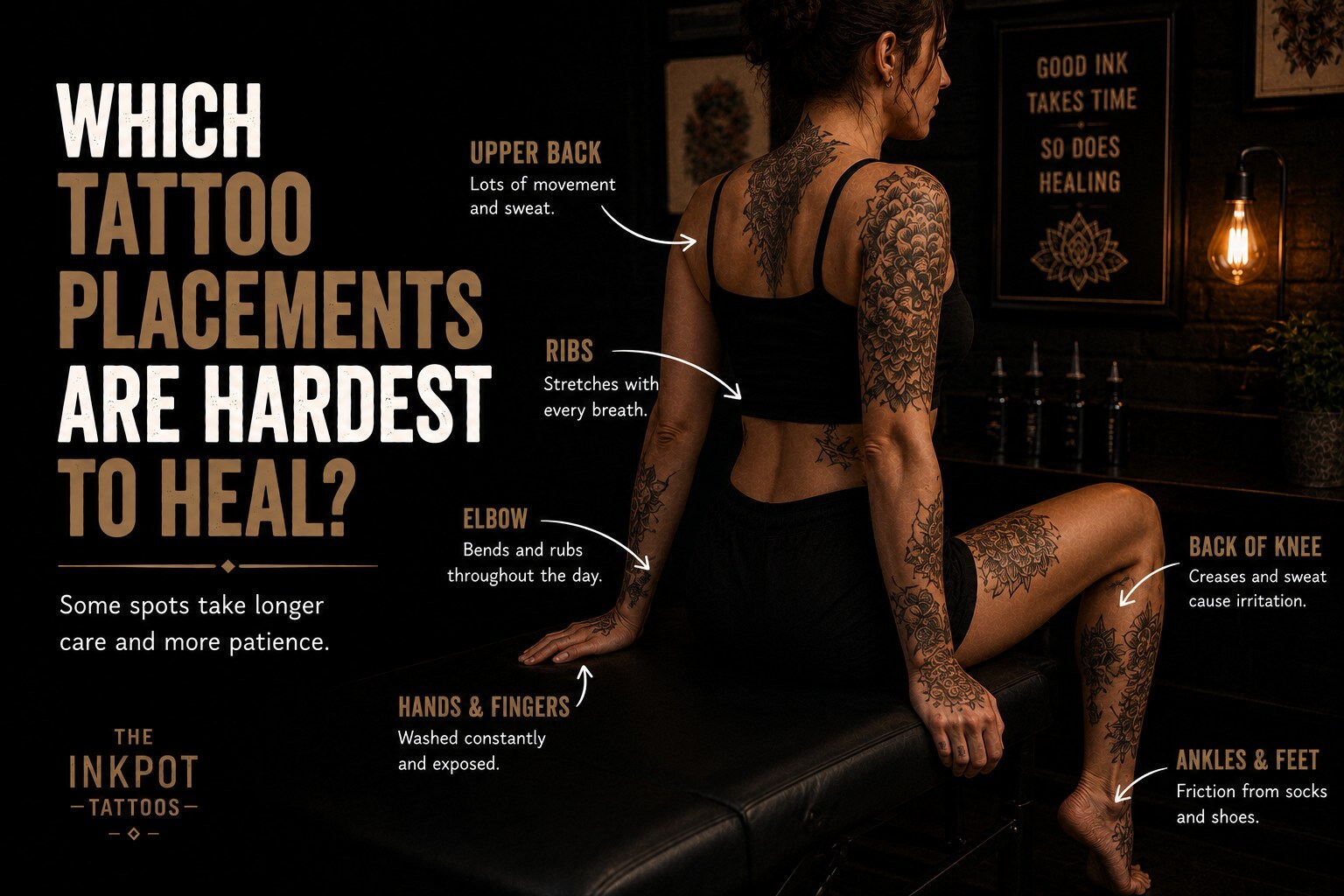
Some parts of the body are simply harder on tattoos. Areas that get lots of friction, movement, or sun tend to fade quicker. Hands and fingers are notorious. Feet and ankles can be a battle. Elbows, knees, waistlines where clothing rubs — all of it adds up.
That doesn’t mean “don’t tattoo there.” It just means go in with honest expectations and choose designs that suit the area. Some placements are touch-up territory by nature. That’s not failure — that’s maintenance.
What actually helps (in real life)
You don’t need a shelf of miracle creams or a ten-step ritual.
If you want your tattoo to stay looking sharper for longer, the boring stuff wins:
Protect it from the sun. Keep your skin moisturised so the tattoo isn’t dulled by dryness and texture. Be gentle with harsh scrubs and constant exfoliation over tattooed areas. And during healing, follow aftercare properly — because healing problems can lock in patchiness that looks like “fading” when it’s really just damaged healing.
If you do those things consistently, most tattoos age in a way that looks natural and good — more “settled” than “washed out.”
When it’s worth a touch-up
Touch-ups are normal. They’re like sharpening a tool you actually use. A small refresh can bring back contrast, tidy softened edges, or restore areas where colour has dropped over time.
But a touch-up won’t freeze a tattoo in its day-one state forever — and it shouldn’t need to. The goal is a tattoo that still reads beautifully as the years move on.
Sometimes the best answer is: “Leave it. It’s aging exactly as it should.” Other times, a small refresh makes you fall in love with it all over again.
Step Right Up (we’ll have a look)
If you’re local and you’ve got a piece you’re worried about — or you’re planning something new and you want it to age well — step right up.
Pop in, show us what you’ve got, and we’ll give you an honest read. No pressure, no upsell, no doom talk. Just proper advice: whether it needs a touch-up, whether it’s settling normally, and what will keep it looking its best from here.
And if nothing else, you can always leave with a coffee while you’re at it. 🖤
Got a tattoo idea in mind? Book your free consultation with The Inkpot and we’ll help you turn it into something you’ll love.