Yes — you can get a tattoo if you feel nervous.
Nerves do not make you a difficult client, and you do not have to pretend to be fearless. We regularly meet people who are excited about their tattoo and still worried about the pain, the needles, feeling faint or simply not knowing how the appointment will work.
The useful question is not “How do I stop feeling nervous?” It is “What would help me feel informed, comfortable and in control?”
Here is how to prepare without turning the appointment into an endurance test.
The short answer: tell your artist
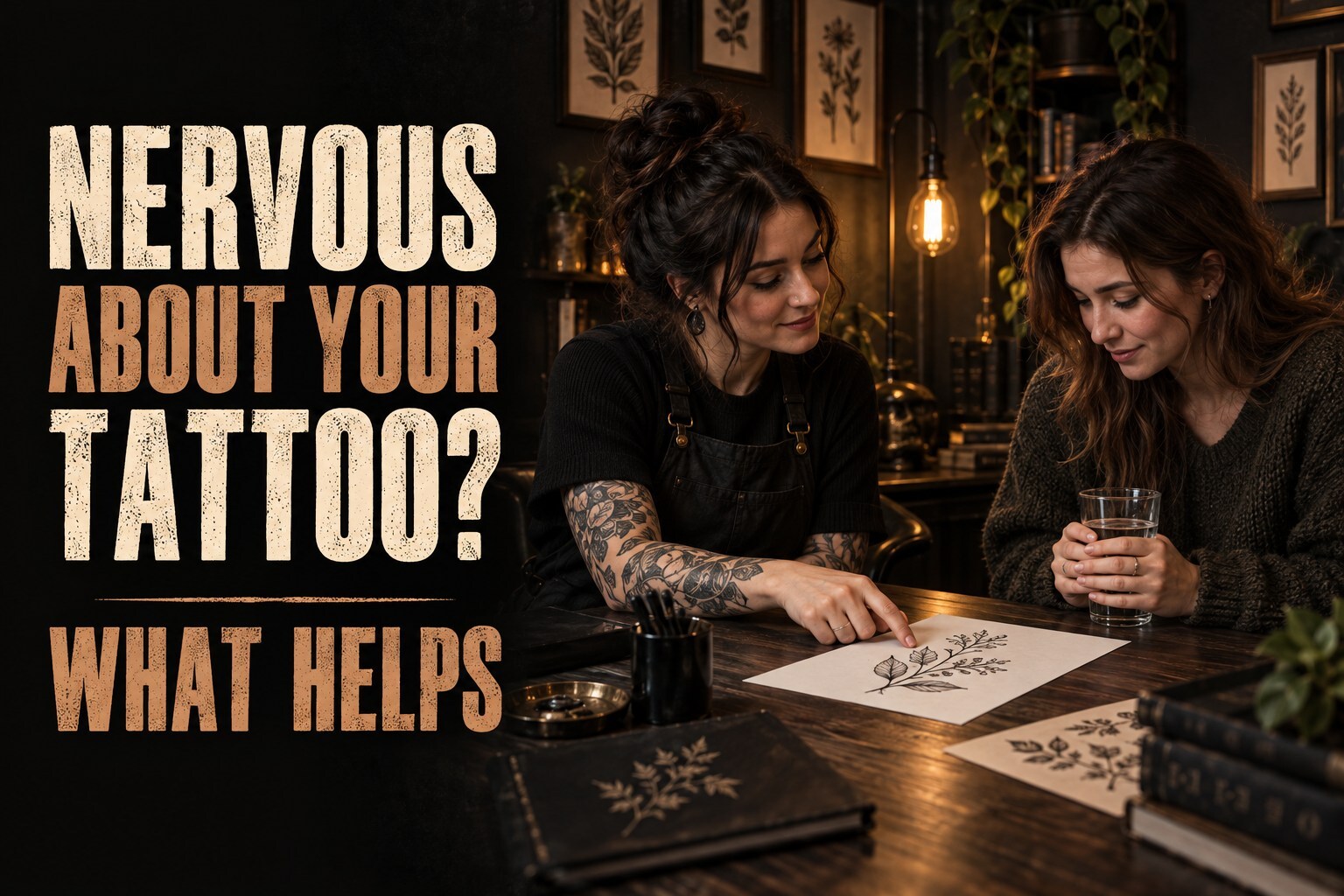
Let the studio know that you are nervous when you enquire or during your consultation. You will not be the first person to say it, and the information helps your artist support you properly.
You might want each stage explained before it happens. You might prefer quiet, a bit of conversation, or permission to listen to something through headphones. You may want to agree how to ask for a break. Those are all reasonable things to discuss before you sit in the chair.
At The Inkpot, consultations are free and include a coffee. There is no test, no pressure to book immediately and no prize for using the correct tattoo vocabulary. Bring your idea and the questions that are making your brain noisy.
Are you nervous about the appointment or unsure about the tattoo?
These can feel similar, but they need different answers.
If you love the design and placement but feel anxious about the process, preparation and communication may make the appointment feel much more manageable.
If you keep changing the design, feel pressured by somebody else, or are trying to persuade yourself that you want it, give yourself more time. A tattoo can wait. Nervousness is not automatically a warning sign, but genuine doubt deserves to be heard.
Our guide to getting your first tattoo in Ross-on-Wye covers artists, consultations, prices, safety and what happens before you book.
Work out what is worrying you
“I am nervous” can contain several different worries:
- How much will it hurt?
- What if I feel faint or panic?
- What if I move at the wrong moment?
- What if the stencil does not look right?
- Will the artist judge my body, idea or pain tolerance?
- Can I ask for a break?
- What am I supposed to bring?
Write your questions down if that helps. Once the worry has a name, your artist can usually give you a practical answer instead of offering a vague “you will be fine”.
How much will the tattoo hurt?
There is no honest universal pain score. The International Association for the Study of Pain describes pain as a personal experience influenced by biological, psychological and social factors. Placement, the type of work, session length and your own body all matter.
A tattoo may feel scratchy, hot, sharp or vibratory at different moments. Another person’s easiest placement might not be yours, so treat dramatic online pain charts as conversation starters rather than promises.
Ask your artist what is realistic for the placement and design you are considering. They can explain the likely session length and how the area is usually positioned, but nobody can guarantee a painless appointment.
Pain is information, not a performance review. Tell the artist if something changes suddenly, if you feel unwell or if you need a pause.
Prepare in reassuringly ordinary ways
The best preparation is not glamorous:
- eat a proper meal before you arrive;
- drink water and try to get a decent night’s sleep;
- allow enough travel time so you are not rushing through the door;
- wear comfortable clothing that gives easy access to the placement;
- bring valid photo ID and the agreed payment method;
- save any key reference images on your phone;
- ask whether headphones or a support person will work in the studio;
- tell the studio in advance about relevant medication, allergies, health conditions or skin concerns.
Do not stop prescribed medication for a tattoo appointment unless the clinician responsible for it has told you to. Avoid alcohol and recreational drugs, and never attend under the influence. They do not make the appointment safer or easier, and the studio may be unable to tattoo you.
For the full practical list, read what to bring to your tattoo appointment.
What happens before tattooing starts?
Your artist should confirm the design, size and placement with you before beginning. The stencil can be checked in the mirror and moved if it does not feel right.
Speak up at this stage. Politely asking to adjust a stencil is normal; wishing you had said something after the tattoo is finished is considerably less convenient.
The area will be prepared and the equipment set up. If seeing equipment makes you more anxious, you can say that you would rather look elsewhere. If knowing each step helps, ask the artist to explain it.
You can also agree how the start will work. Some nervous clients appreciate a clear warning before the first line and a quick check-in once they know what the sensation feels like.
Can you ask for a break?
Yes. Tell your artist if you need to pause, feel light-headed, become overwhelmed or need to change position.
Breaks need to be managed around the tattoo and the working setup, so talk about them rather than suddenly moving. Your artist may suggest a sensible stopping point or ask you to stay still for a few more seconds while they make the area safe.
Try not to wait until you feel dreadful. Saying “I need a minute” early is much easier than attempting to be heroic until the room starts behaving strangely.
What if you are worried about fainting or having a panic attack?
Tell the studio before the appointment, especially if you have fainted during needles, blood tests or medical procedures before, or if you experience panic attacks.
During the session, say immediately if you feel dizzy, sick, clammy, unusually hot, short of breath or detached from what is happening. Do not stand up suddenly. The artist can stop and help you get into a safer position while you recover.
Slow, gentle breathing may help with feelings of stress, anxiety or panic. The NHS breathing exercise recommends letting the breath move comfortably, without forcing it, and breathing gently and regularly.
If anxiety is affecting your everyday life, you are struggling to cope, or the things you have tried are not helping, tattoo advice is not a substitute for healthcare. The NHS guidance on anxiety, fear and panic explains self-help options, GP support and NHS talking therapies.
Can you distract yourself during the session?
Often, yes — provided the distraction does not stop you hearing the artist or holding the position safely.
Music, a podcast or an audiobook can give your attention somewhere else to go. Some people prefer to chat; others would rather concentrate quietly. Ask what works for the artist and the position you will be in.
If you want to bring a friend, check first. Studio space, privacy and concentration matter, and not every appointment can accommodate an extra person. One calm companion is also more useful than a travelling audience.
What about numbing cream?
Do not apply a numbing product without discussing it with your artist first.
Products, ingredients, application times and the amount of skin involved vary. Local anaesthetics are medicines, and the NHS overview of local anaesthesia notes that creams and other forms can have side effects and may not be suitable for everybody.
Your artist can explain their studio policy, but a pharmacist or appropriate healthcare professional is the right person for medical advice about whether a product is suitable for you. If one is agreed, follow its instructions exactly. Numbing cream should not replace an honest conversation about nerves, breaks or how you are feeling.
When is it better to postpone?
It is sensible to pause if you are unwell, have a problem with the skin being tattooed, arrive under the influence, cannot comfortably confirm the design and placement, or feel too overwhelmed to communicate and give clear consent.
Changing the date is frustrating, but it is better than pushing through an appointment you are not ready for. Contact the studio as early as possible because cancellation and deposit terms may apply.
If the nerves belong to the appointment but the tattoo itself still feels right, a consultation can help you build a plan. If the tattoo no longer feels right, waiting is also a perfectly good decision.
A simple plan for a nervous tattoo client
- Book a consultation before committing to the appointment.
- Tell the artist exactly what worries you.
- Ask what will happen, how breaks work and what you should bring.
- Eat, hydrate, rest and leave enough travel time.
- Bring practical clothing, photo ID and a quiet distraction if agreed.
- Discuss numbing products before using them.
- Speak up early if you feel unwell or overwhelmed.
- Give yourself permission to wait if the design or decision does not feel right.
Final thoughts
You do not need to become fearless before getting a tattoo. You need enough information, trust and breathing room to make the decision for yourself.
At The Inkpot Studio in Ross-on-Wye, you can tell us that you are nervous. We can talk through the design, explain the process and help you plan an appointment that feels manageable — with no bravado required.
This article offers general information and is not medical advice. Speak to an appropriate healthcare professional if anxiety, fainting, medication or another health concern may affect your appointment.
Got a tattoo idea in mind? Book your free consultation with The Inkpot and we’ll help you turn it into something you’ll love.