Booking your first tattoo can feel exciting, slightly nerve-racking and oddly difficult to begin. You might have a finished idea, three screenshots that make sense only to you, or simply a feeling that you are ready for one.
All of those are perfectly reasonable starting points.
You do not need to understand every tattoo style, know your pain tolerance or arrive with a polished drawing. You need a reputable studio, an artist whose work suits your idea and enough honest information to make a decision without rushing.
Here is what to know before booking your first tattoo in Ross-on-Wye.
The short answer: start with a conversation
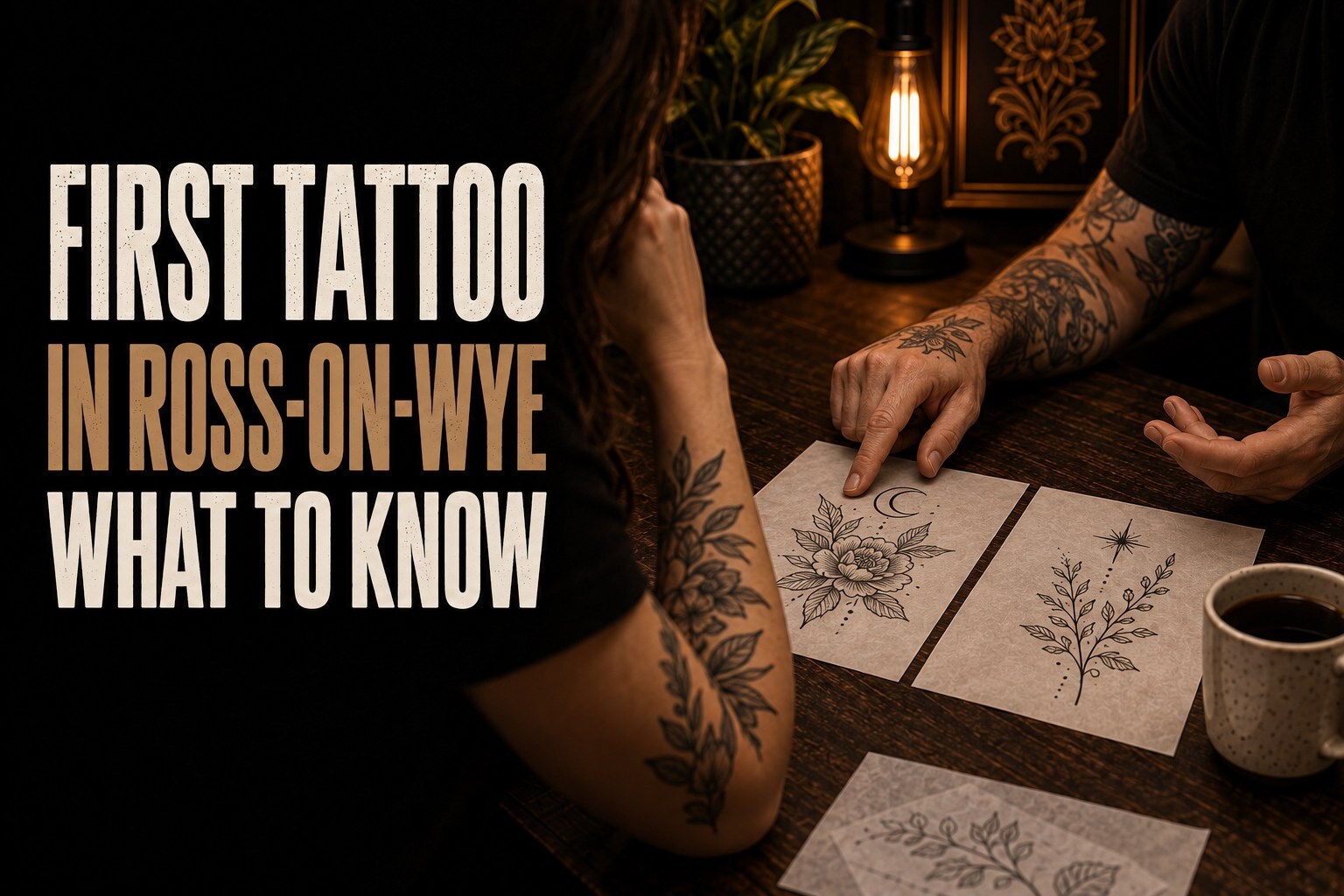
A consultation is where a loose idea becomes a workable tattoo plan. It gives you and the artist time to discuss the subject, style, size, placement, budget and anything you are worried about before an appointment is reserved.
At The Inkpot, consultations are free and include a coffee. There is no test and no expectation that you already know the correct tattoo vocabulary. Bring what you have and explain what you like about it.
A useful consultation should leave you clearer about:
- which artist is the best fit for the style;
- whether the design needs simplifying, enlarging or adjusting;
- where it could sit comfortably on your body;
- the likely session and price;
- how booking, preparation and aftercare work.
If you leave with a slightly different plan from the one you arrived with, that does not mean your first idea was wrong. It usually means the design has started becoming a tattoo rather than remaining a picture on a screen.
Do you need a finished design?
No. Reference images are useful, but they are there to show the mood, subject, composition or level of detail you like. They are not an instruction to copy another tattoo line for line.
Save a small selection of useful references and be ready to explain what attracts you to each one. Perhaps you like the movement in one design, the shading in another and the amount of open space in a third. That is much more helpful than handing over a board of 200 images and saying, “Something like all of this.”
Your artist may recommend changing the scale or placement so the design has enough room to remain readable. Skin moves and curves, and a design that looks lovely as a tiny phone image may need more breathing space when it becomes a tattoo.
If you are still choosing between ideas, our guide to whether a first tattoo needs to be meaningful may take some pressure off.
How do you choose the right tattoo artist?
Start with portfolios. Look for artists who regularly produce work in the style you are considering, rather than choosing only by location, follower count or the first available appointment.
Pay attention to consistency across a body of work. Look at line quality, shading, colour, composition and how designs sit on different parts of the body. Healed photographs are particularly useful when they are available because a fresh tattoo does not show you how the work has settled.
You should also feel comfortable asking questions. A good consultation is collaborative: the artist listens, explains practical limits and offers alternatives without making you feel silly for being new to the process.
If somebody promises that every idea will work at any size or seems irritated by reasonable questions, keep looking. Honest advice is part of the job.
Our guide to choosing the right tattoo artist for your style explains what to look for in more detail.
How old do you need to be, and should you bring ID?
In England, it is an offence to tattoo somebody under 18 except when the tattoo is performed for medical reasons by an appropriately qualified medical practitioner or under their direction. Parental permission does not change that rule. This comes from the Tattooing of Minors Act 1969.
Bring valid photo ID to your appointment, even if you think you obviously look over 18. A passport or photocard driving licence is usually the simplest option; ask the studio beforehand if you intend to use something else.
What should you expect when booking?
Once the idea, artist and likely session have been agreed, the studio can offer a date and confirm the price.
At The Inkpot, we usually ask for a 20% deposit when a date is confirmed. It reserves the appointment and counts towards the final cost; it is not an extra fee added on top. Cancellation and rescheduling terms should be explained before you pay.
You can read more about how tattoo deposits work.
Tattoo prices depend on the size, placement, detail and time involved. A tiny design is not priced by simply dividing a day rate into very small pieces because every appointment still involves preparation, safe setup and cleaning. The Inkpot’s current tattoo pricing page lists a £50 minimum charge and guide prices for longer sessions, but your quotation should be based on your actual tattoo.
Your first tattoo does not automatically need a half-day appointment. Some take less time and some take much longer. The right session is the one the design requires.
What should a safe tattoo studio provide?
In Herefordshire, both the person carrying out tattooing and the premises must be registered with the council. You can check the local requirement on the Herefordshire Council registration page.
Registration is a starting point, alongside professional hygiene and clear communication. A responsible studio should use sterile single-use needles, dispense pigment into fresh single-use containers for each client, prevent cross-contamination, clean and disinfect surfaces and safely manage anything that has contacted blood or broken skin.
The UK Health Security Agency’s tattooing guidance explains why infection prevention matters and links to the national good-practice toolkit.
You should also receive aftercare instructions suited to your tattoo and dressing. Ask questions if anything is unclear. The studio should support you with routine aftercare, while making it clear that an artist cannot diagnose an infection or other medical condition.
How much will your first tattoo hurt?
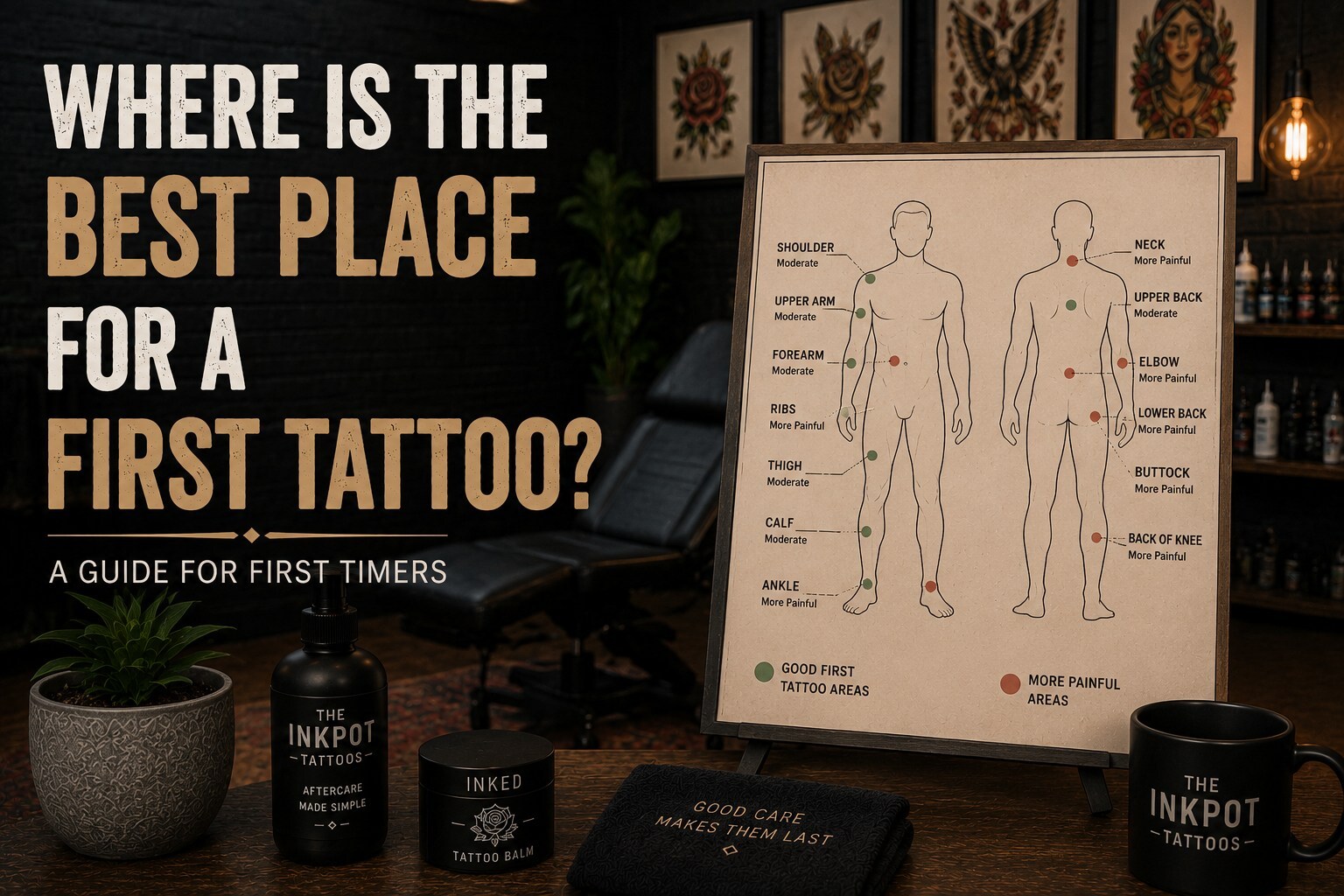
There is no reliable pain score that applies to everybody. Placement, session length, the type of work and your own body all affect how it feels.
Bony areas and places with less cushioning can feel sharper for many people, but somebody else’s “easiest tattoo ever” may not be yours. Choose a placement because it works for the design and your everyday life, not because an online chart has awarded it three flames instead of five.
Tell your artist if you are nervous. You can agree how to ask for a break and what position you will need to hold. There is no medal for pretending you are fine when you need a minute.
What should you do before the appointment?
Preparation is reassuringly ordinary:
- eat a proper meal before you arrive;
- drink water and try to get a decent night’s sleep;
- bring your photo ID and the agreed payment method;
- wear comfortable clothing that gives easy access to the placement;
- save your key reference images on your phone;
- avoid alcohol and recreational drugs;
- tell the studio in advance about relevant health, medication, allergy or skin concerns.
Do not stop prescribed medication for a tattoo appointment unless the clinician responsible for it has told you to. Do not apply numbing cream without discussing it with the artist first, because products and application methods vary.
Our tattoo appointment checklist covers clothing, food, references, payment and the things best left at home.
What happens on the day?
Your artist will confirm the design, size and placement with you before tattooing begins. The stencil may be moved or adjusted until it sits properly. This is the moment to speak up if something does not feel right; politely asking to move a stencil is much easier than wishing you had.
During the session, stay as still as you reasonably can and tell the artist if you feel faint, unwell or need a break. Once the tattoo is finished, it will be cleaned, dressed where appropriate and you will be shown how to look after it.
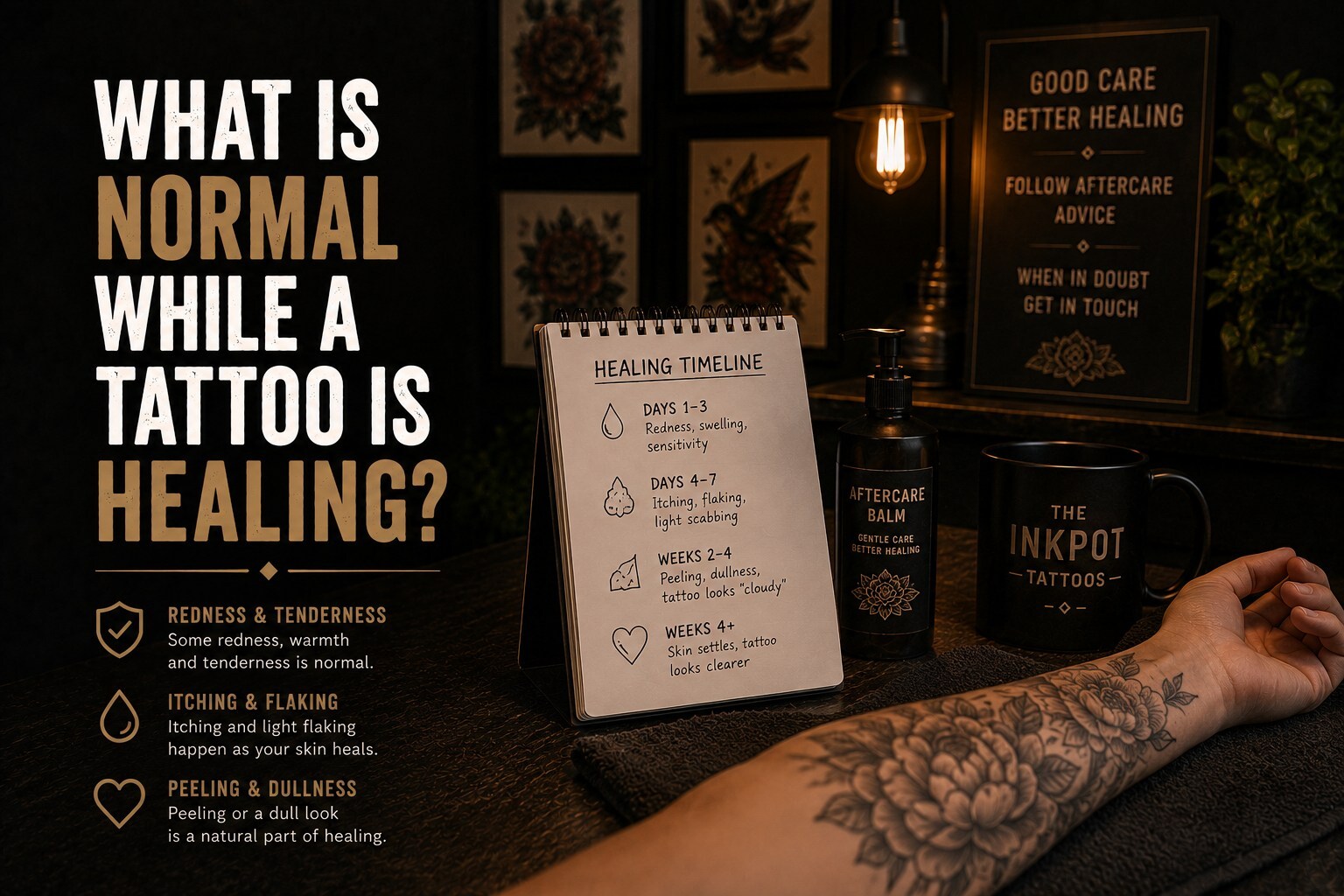
A fresh tattoo will change while it heals. It may feel tender, look brighter than the final result and later become dry or flaky. Follow the specific instructions you are given rather than assembling an aftercare routine from five different videos.
A quick first-tattoo checklist
- Choose the idea because you like it, not because you can produce an impressive explanation.
- Find an artist whose portfolio fits the work.
- Check that the practitioner and premises are properly registered.
- Discuss size, placement, price, deposit terms and aftercare before booking.
- Bring valid photo ID.
- Eat, hydrate and wear practical clothing.
- Ask questions whenever something is unclear.
Final thoughts
Your first tattoo does not have to be the biggest decision you have ever made. It does deserve enough time and care to feel right.
Start with a conversation. Bring the references you genuinely like, be honest about your budget and nerves, and listen when an experienced artist explains how the design could work on skin.
At The Inkpot Studio in Ross-on-Wye, you are welcome to come in with a complete plan or the beginnings of one. We will help you turn it into something practical, personal and properly considered — with no pressure and, yes, a coffee.
Got a tattoo idea in mind? Book your free consultation with The Inkpot and we’ll help you turn it into something you’ll love.