Some tattoo placements are simply easier to heal than others.
That does not always mean the most painful areas are the hardest ones to look after afterwards. In fact, some of the trickiest tattoos to heal are difficult for a much more ordinary reason: everyday life keeps getting in the way.
Hands need washing. Feet need shoes. Knees and elbows bend. Waistbands rub. Some areas are harder to keep clean, harder to protect or harder to leave alone while the skin settles.
If you are worried about healing before choosing a placement, that is a sensible thing to think about. The aim is not to find a “perfect” area. It is simply to understand what each placement might ask of you afterwards.
The Hardest Placements to Heal Are Usually the Ones You Cannot Leave Alone
A fresh tattoo benefits from being kept clean, protected from unnecessary rubbing and generally given a bit of peace while it heals.
That is easier on some parts of the body than others.
An upper arm tattoo, for example, can often be left relatively undisturbed. A finger tattoo cannot. You will still need to wash your hands, use them, grip things, get dressed and go about your day.
The same applies to feet. You may need to wear shoes, walk around and put pressure on the area whether you like it or not.
That is really what makes some placements more awkward.
Hands and Fingers
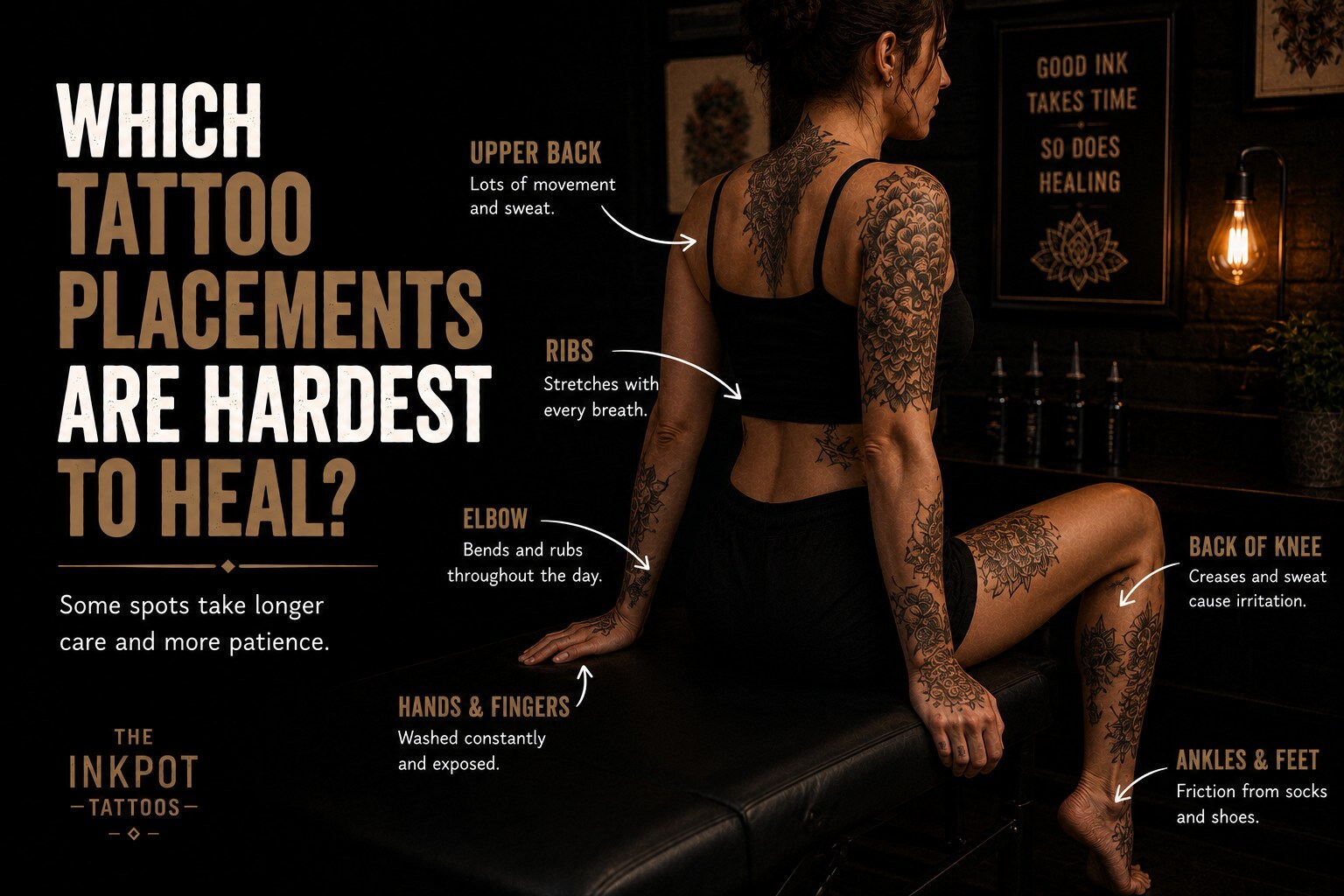
Hands and fingers are among the most awkward placements to heal.
They are constantly in use, constantly being washed and constantly coming into contact with things around you.
That makes it difficult to give a fresh tattoo much rest.
Dressings can also be harder to keep in place depending on exactly where the tattoo sits, and ink retention on fingers and hands can be less predictable than on many other areas.
That does not mean hand and finger tattoos are a bad idea. Small, bold designs can work very well there.
It just means you should go into it knowing that they can be a little more demanding during healing and may sometimes need more attention once fully healed.
Feet and Toes
Feet and toes can be similarly awkward.
The biggest practical problem is footwear.
A healing tattoo on the foot may be sitting inside socks and shoes for large parts of the day, which means pressure, rubbing and less airflow than you might ideally want.
If you are planning a foot tattoo, think about what you will need to wear in the days afterwards.
If your job means spending ten hours a day in tight work boots, for example, that is worth mentioning before booking.
You do not necessarily need to abandon the placement. It might simply affect when you choose to have it done and how you plan the first part of the healing period.
Elbows and Knees
Elbows and knees can also require a bit more thought because they spend so much time bending.
The skin is constantly moving as you walk, sit, stand, reach and generally use your body normally.
They can also rub against clothing or surfaces more easily than flatter areas.
You should not try to completely immobilise yourself after a tattoo, but being aware of repeated rubbing can make the healing period easier.
Loose, practical clothing is usually much more helpful than trying to carry on in something tight that repeatedly drags across the tattoo.
The Inner Elbow and Other Skin Folds
The inner elbow, sometimes called the ditch, can be another slightly awkward area.
Every time you bend your arm, that patch of skin folds and compresses.
That can make it more irritating to heal than a flatter part of the arm.
The same general idea applies to other placements that naturally sit in folds or areas where skin regularly presses against itself.
They are not impossible to heal. They just tend to be harder to leave alone.
Ankles
Ankles are not always difficult, but footwear can turn them into an awkward placement.
A tattoo sitting exactly where the edge of a trainer, boot or sock rubs may be much more annoying to look after than one positioned slightly away from that contact point.
This is a good example of why placement is not just about choosing the body part.
Sometimes moving a tattoo by a small amount can make the practical side of healing much easier.
Your artist can help you think about that before the stencil goes on.
Areas Under Waistbands, Bra Straps or Tight Clothing
Some placements are not naturally difficult to heal but become awkward because of what you wear every day.
A fresh tattoo directly underneath a waistband, bra strap or other tight piece of clothing may be repeatedly rubbed throughout the day.
If you are planning a tattoo in one of these areas, think about what you can realistically wear afterwards.
You do not need to redesign your entire wardrobe for a tattoo.
It is just worth making sure you have something comfortable and loose enough to avoid unnecessarily aggravating the area.
Hard to Heal Does Not Mean Painful to Tattoo
This is an important distinction.
The most painful tattoo placements are not automatically the hardest ones to heal.
A rib tattoo might be very uncomfortable for some people during the session, but afterwards it can often be relatively easy to leave alone depending on clothing and lifestyle.
A tiny finger tattoo might take far less time to tattoo, but then spend the next week being washed, bent and used hundreds of times a day.
Pain and healing are two separate questions.
If you are choosing a placement, it is worth thinking about both.
Your Lifestyle Matters More Than Any Placement Ranking
There is no completely accurate list that says one body part is always harder to heal than another.
Your routine matters.
A foot tattoo may be easy enough for somebody who can spend a few days in loose footwear, but much harder for somebody who works long shifts in heavy boots.
A knee tattoo may be straightforward for one person and a nuisance for somebody who spends all day kneeling at work.
A forearm tattoo might normally be fairly easy to manage, but less so if your job constantly exposes that area to dirt, rubbing or repeated washing.
This is why it is worth telling your artist what your normal day actually looks like.
They do not need your life story. They just need enough information to help you plan sensibly.
What Usually Makes a Placement Easier to Heal?
Generally speaking, the easiest placements are the ones that can be kept relatively clean, uncovered when appropriate and away from constant rubbing or pressure.
Larger, flatter areas of the body can often be simpler for that reason.
That does not mean they will heal faster in some biological sense.
They are simply easier to manage.
And when it comes to tattoo healing, practical usually matters more than dramatic.
Aftercare Still Matters
Placement can make healing easier or harder, but aftercare still plays a big part.
At The Inkpot Studio, we normally use second skin where the placement allows it. Your artist will explain how long to leave it on and what to do once it comes off.
After that, the aim is generally simple: keep the tattoo clean, give it some air and use only a very thin layer of gentle moisturiser when needed.
More product is not better.
You also want to avoid unnecessary soaking while the tattoo is healing, so swimming, hot tubs and long baths are best left until the skin has properly healed.
Sun exposure is worth being careful with too. Fresh tattoos should be protected while healing, and looking after healed tattoos in the sun can help preserve them over time.
Do Not Overthink Every Little Change
Fresh tattoos can look a bit strange while they heal.
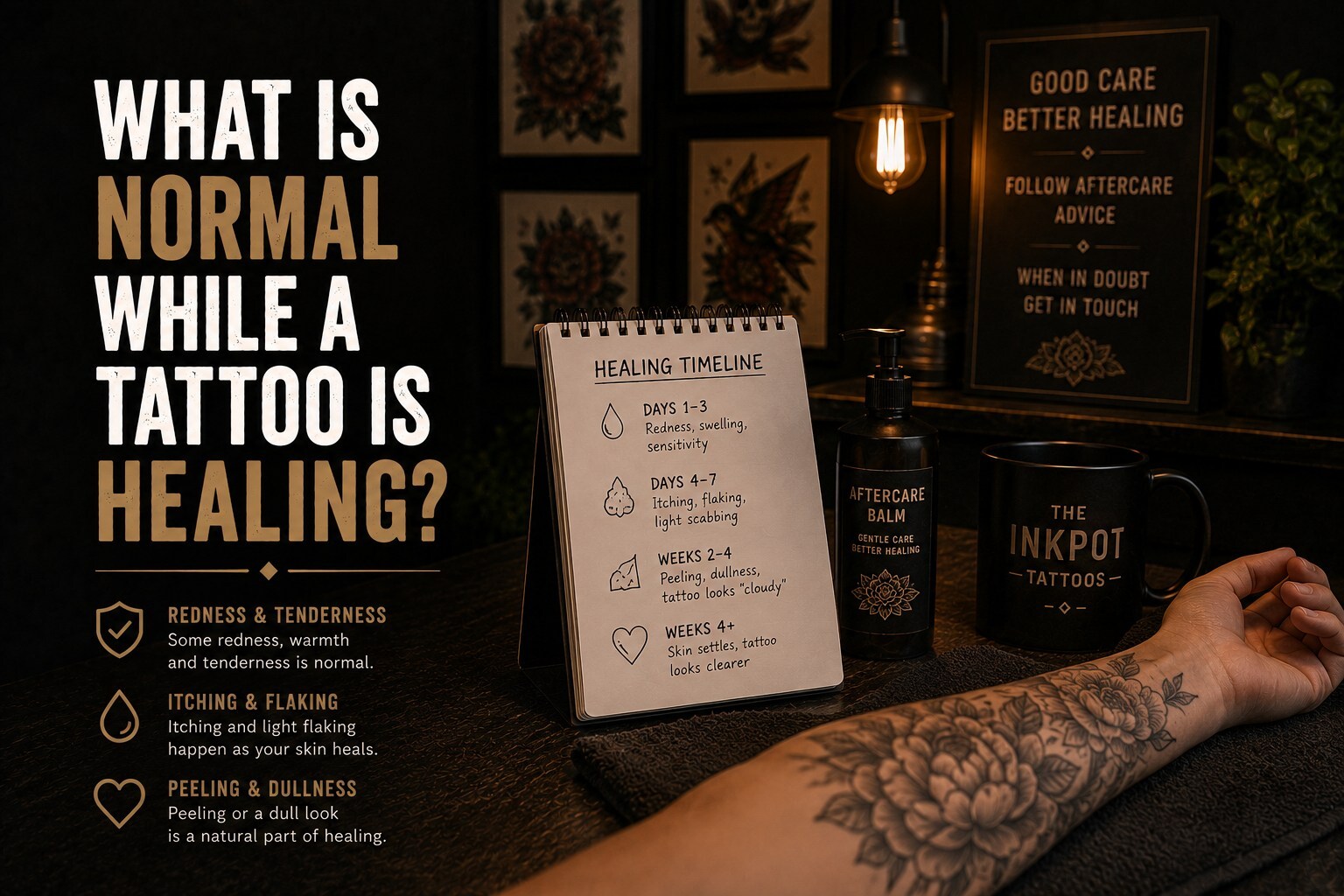
Some redness and tenderness early on can be normal. Later you may notice dryness, itching or flaking.
Different people heal at slightly different speeds, so comparing your day five tattoo with somebody else’s day five tattoo is not particularly useful.
If something seems to be getting worse rather than settling, or you are genuinely concerned about how it looks or feels, do not try to diagnose it from photographs online. Speak to your artist and seek appropriate medical advice where needed.
The important thing is not to panic simply because the tattoo does not look exactly the same every day while it heals.
Can Difficult Placements Still Heal Well?
Absolutely.
Calling a placement “harder to heal” does not mean it is doomed to go wrong.
It just means you may need to plan around it a little more carefully.
If you know your foot tattoo is going to sit underneath a work boot, tell your artist.
If you are planning a knee tattoo but spend every day kneeling for work, mention that.
If you want a finger tattoo, go into it knowing that hands can be less predictable and may sometimes need another pass after everything has healed.
Being prepared is much more useful than being scared of the placement.
Final Thoughts
The hardest tattoo placements to heal are usually not difficult because there is something fundamentally wrong with the skin there.
They are difficult because everyday life will not leave them alone.
Hands get washed. Feet go into shoes. Knees bend. Elbows flex. Waistbands rub.
That is the practical reality.
If you are choosing between placements, think about what your normal routine looks like and how easily you can protect the area while it heals.
You do not need to avoid every slightly awkward placement. You just need to know what you are signing up for.
At The Inkpot Studio in Ross-on-Wye, our consultations are free and currently include a coffee, so if you are unsure whether a particular placement makes sense for your tattoo or your lifestyle, we are always happy to talk it through.
Got a tattoo idea in mind? Book your free consultation with The Inkpot and we’ll help you turn it into something you’ll love.